The Life and Disputed Death of Jeni Kelly

A Note from Jeni’s Daughter
This piece was written by Megan Van Loon to help me share my mother Jeni’s story. Telling her story is deeply important to me, and my biggest hope in putting this out into the world is that it raises awareness and sheds light on critical issues.
The Woman who Chose to Love
“My mom loved broken, fragile things: orphaned baby birds who had fallen out of the nest, baby squirrels who had no one to care for them, dogs who were literally dropped on their head and ‘not quite right,” Emily writes of her mother, Jeni. The line grabs me, and the next one tugs at my heart. “She also loved me, not because of blood,but because she chose to love me.” I continue reading the Reddit post about a warm, maternal woman who had passed away far too young in my city of Colorado Springs. Jeni hadn’t been here but for one summer when she supposedly committed suicide. But Emily shared that she had unresolved questions about the coroner’s ruling. Jeni’s partner had been violent and she had been scared; Jeni texted her cousin just days before her death stating as much. A startling police report from eleven days before her death gives us insight into why. Still, the case was quickly closed. Jeni’s case frustrated and resonated with me, so I asked Emily if I could write about her mom—who Jeni was as a person, the questions and concerns raised by her case, and the lessons we may learn from her. Fortunately, Emily agrees.
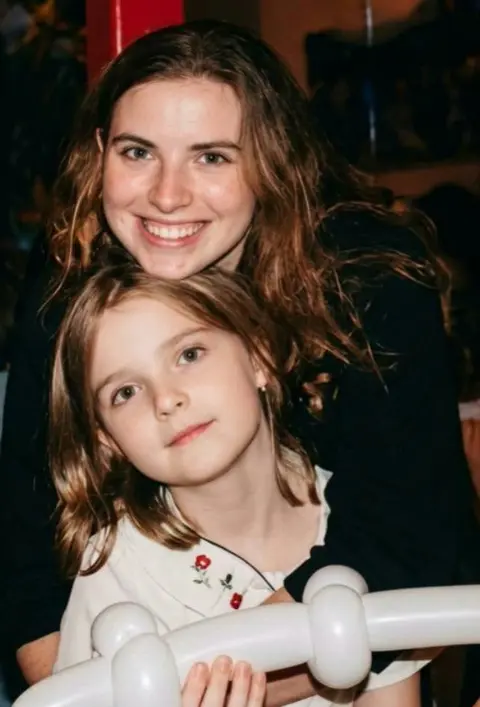
She starts by sending me pictures; they are beautiful and make my chest ache. Jeni was a dainty brunette with a bright smile that reached her eyes, especially when embracing her children or pets. She looks familiar. She could be my mom. She could be your mom, aunt, sister, grandma, or friend.

Almost 1 in 2 women in the United States experience some form of what researchers call intimate partner violence in their lifetime, such as sexual violence, physical violence, or stalking. You likely know or will meet someone experiencing what Jeni did, and that’s why her story is so important to share. While society has indeed progressed in how we discuss and perceive domestic violence, it is arguably still not discussed enough. For nearly one in two women to be victims, we are awfully quiet about the subject. And that’s why I’m eager to write about Jeni, so Emily and I schedule a chat.
Emily sounds kind and composed, even though our conversation is difficult; it’s a testament to Jeni, who though a stepparent to Emily, wholeheartedly became mom and primary parent. “She was my best friend in the whole world. Any time I’m having a bad day or something, I just have to remember Jeni’s laugh and smile, and I’ll be okay for a little bit. She’s the reason that I even know what joy is.” I think back to a picture of Jeni holding little Emily and how genuinely happy they looked together. Jeni poured love into Emily, became her daughter’s “safe space,” and gave her three little brothers. Jeni was also an entrepreneur, a skilled florist who ran Flowers By Jeni. “She absolutely loved helping make dreams come true. She was known as the wedding specialist,” Emily explains. “And she was so good at it. She was so confident.” Jeni was active in the small business community of New Braunfels, Texas, where she once hosted a bridal show event promoting other vendors just after the 2008 financial crisis. “It’s free for the vendors and visitors … It’s a wonderful way to promote New Braunfels and increase the business here, especially in tougher economic times,” Jeni had told the local Herald-Zeitung in the summer of 2009. I appreciate that the Herald-Zeitung captured and memorialized who Jeni was at her core in a business piece, of all things: someone with an overarching desire to help others, who valued kindness in all facets of her life. I consider the ripple effect of Jeni’s loss; it’s not just her children and family who suffer, but her friends, her neighbors, her community. She’s the kind of person I would have loved to have met here in the Springs.
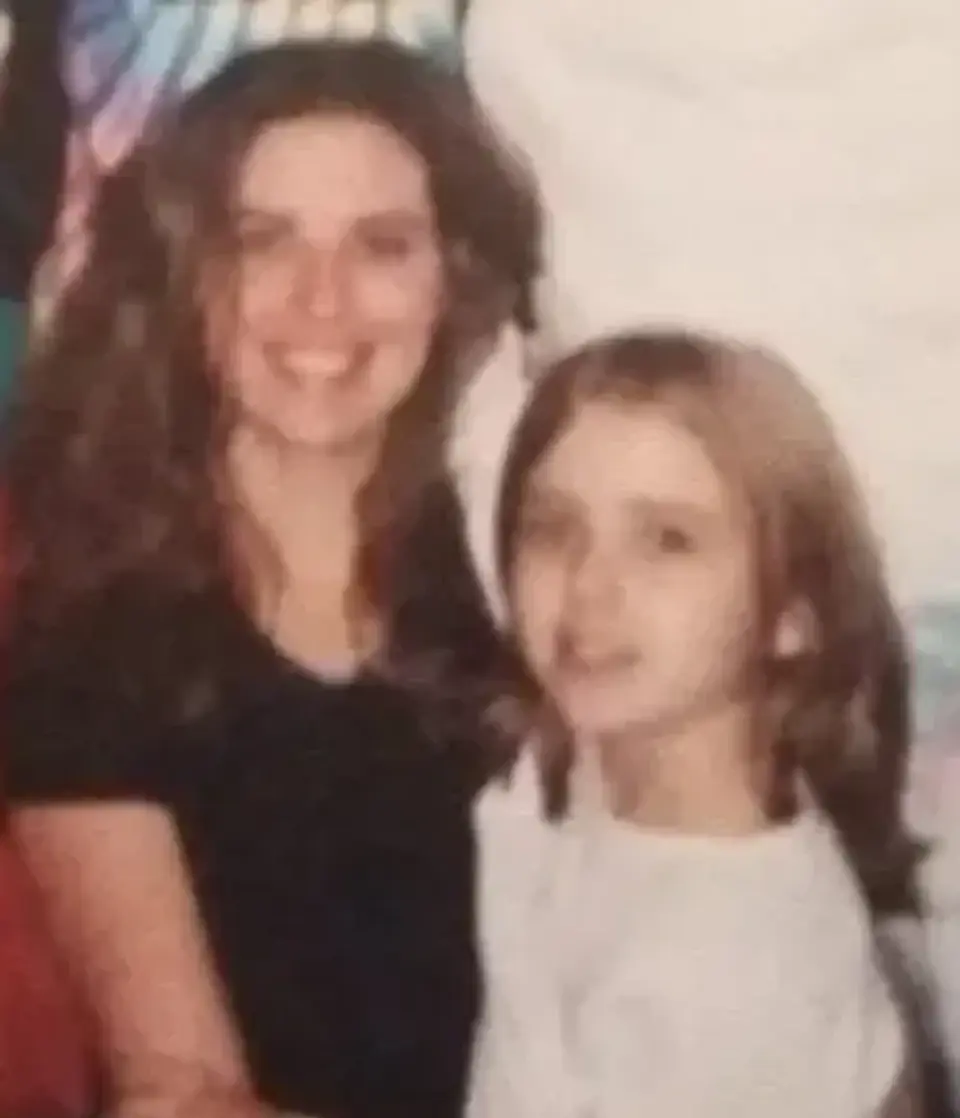
When Jeni left Emily’s father, Emily followed her mom. They lived together until August 2013. As mothers and daughters sometimes do, Jeni and Emily had a falling out. “I really wish we had gotten more time together as I grew up,” Emily says, holding her emotions back. They deserved more time, and the two were making their way back to each other, but things seemed to go awry rather quickly after Jeni met and married her new husband, who we will refer to as A.H. They married on June 28th, 2014 in New Braunfels.
The Tale of Two Police Reports
Emily and Jeni reconnected just before Jeni married. Jeni and her new husband were moving to Colorado Springs, Colorado, and Jeni was eager to host Emily in the scenic state. “She was excited for me to come visit because there’d be wolves, and she knows I love wolves.” But communication fell off between the pair; Jeni’s summer here was a seemingly traumatic whirlwind, and she hadn’t clued Emily into the turmoil in her new marriage. Jeni and A.H. had moved in with two roommates, J.C. and C.S. I made the short drive over to the North Chelton Drive property, where the group shared a small brick house with a towering, full tree bathing the lot in shade. Jeni was within biking distance of Palmer Park, a community favorite spot for short hikes. She probably saw some of the mountainous Front Range from her back yard. We know she worked at the Broadmoor Resort that summer, a picturesque, sprawling vacation hotspot nestled at the base of the mountains. “Jeni only lived here [shortly] before she died. And that really sucks because it’s such a beautiful place and she really wanted me to come visit her,” Emily says. Jeni’s short time here was not pleasant; as I drive by her home, I think of what life should have been for a new transplant—exploring touristy spots, shady hikes in the sunny weather, visiting one of the world’s best zoos. I hope Jeni experienced something positive here, but it’s hard to find solace in that. The reality is, she was being viciously, physically abused by her husband, the person who was supposed to love and protect her, as over thirty-two percent of American women are. It’s probably happening right now on this street, I think.
Around midnight on September 18, 2015, an officer from Colorado Springs Police Department responded (CSPD Report # 2015-00037351) to the little brick house after 9-1-1 dispatchers got a brief, disconnected call from a female saying “Oh, I can’t, I can’t, I can’t.” The call was from Jeni, who met the officer at the door and explained how she had repeatedly tried to call for help, but A.H. would not let her. She had disconnected the call out of fear when he returned to their bedroom. The officer seemingly realized the seriousness of the situation; he took a detailed report—a report that was remarkably more detailed than the one written about Jeni’s death just eleven days later. It gives us the most insight about Jeni’s abusive relationship with A.H. and is what leads one to question the suicide narrative. Jeni had been strangled on September 18th. She stated that A.H. “grabbed her by the throat with both hands on the front.” She tried to leave, but he grabbed her by the throat again with one hand and pulled her from the porch back into the house. The officer documented corresponding redness on her neck and upper chest. The statistics regarding strangulations and eventual homicides by intimate partners is alarming and forces one to wonder what, exactly, happened to Jeni when she supposedly died of a suicide by strangulation. Researchers have established that non-fatal strangulation by an intimate partner is a staggering risk factor for attempted or completed homicides later. Women who have been strangled have a 700 percent greater chance of being killed by that same partner in the future. Maybe Jeni knew this had crossed a line and tried to leave A.H.; perhaps that’s what triggered her death days later, or maybe not. But it’s important to know that abuse often escalates and violence and homicide risks increase when a victim tries to leave.
Abuse victims don’t leave for a number of reasons: fear about what happens after leaving, lack of financial resources, social shame, concern for pets, and so much more. It’s part of why it takes women seven attempts to leave an abusive relationship on average. But Jeni was really afraid that night—she had repeatedly told the officer that, and he reiterated it twice in his report. And she was really trying to leave. She tried to leave the house, A.H. violently pulled her back in. She tried to call police three times, he stopped her by holding her down by her shoulders. She banged on roommate C.S.’s wall, trying to get help. C.S. told the officer the altercation was “a regular occurrence between the two of them, so he did not pay attention to it.” Jeni was willing to speak to a Victim’s Advocate, but A.H. “suddenly came out of the house and sat beside [Jeni]” and then “began to obstruct [Jeni] from going with the Victim’s Advocate.” Could she have safely left if she wanted to? The dynamics documented in the September 18th report—A.H.’s hovering, controlling nature and obstruction of her free will—indicates not. That evening, A.H. was arrested on charges of assault, harassment, and obstructing arrest (El Paso County Case # 15M5856) , all with a factual basis or sentence enhancer of domestic violence, but it seems he was granted and released on bond. The Colorado Bureau of Investigation report surrounding the outcome of these charges are sparse, but it seems A.H. got a sweetheart plea deal: just twelve months of probation for a single conviction of disorderly conduct.
Jeni’s days between September 18th and September 29th, 2015 are largely a question mark. We know A.H. was released from custody during this time frame given he was present at her death. According to Jeni’s cousin, Jeni sent a Facebook message stating that she was afraid of her husband just a couple of days prior to her death. (Jeni’s cousin spoke with the lead investigator regarding this message; two days after they spoke, Jeni’s case was closed.) But in the police report taken in the early morning of September 29th (CSPD Report # 2015-00038864) , their roommates, C.S. and J.C. paint a rosier picture. C.S., who had heard the violent attack on Jeni just eleven days prior, said the couple appeared “to be happier with one another and not fighting as much as previously.” J.C. reiterated that “they had been working on their relationship and did not appear as though there had been any arguments.” It seems that the officers did not ask A.H. directly what their relationship had been like since his arrest, which law enforcement was aware of; rather, A.H. “continuously yelled and screamed and would not calm down,” and officers were seemingly more concerned with documenting his narrative about why Jeni had supposedly partially hung herself from their bedroom door handle. Jeni was upset, he began, about an upcoming court case involving custody of her sons. He wanted her to “calm down” and offered to give her ten minutes alone while he lit a bonfire for them to enjoy in the backyard. He gave her an unspecified amount of extra time to calm down before he went inside to fetch her, but the bedroom door would not open. He banged on the door and called out for Jeni, but he couldn’t get in. He went back outside to look through their bedroom window, and that is how he found Jeni deceased of a supposed hanging. If things were improving with A.H., and if Jeni was so concerned about custody of her children, why would she commit suicide? “I really don’t feel like she would have left us on purpose,” Emily says of her and her brothers. “I think a lot of kids know that instinctually—whether a parent would or not.” That gut feeling is what drove Emily to delve deeper into what happened to her mom, who had not disclosed the violent nature of her relationship to Emily.
But law enforcement and the coroner seemingly took the suicide narrative at face value. Unfortunately, the police who responded to Jeni’s death were not the same officers who had responded to the domestic violence call on September 18th; the reports differ dramatically in thoroughness and detail. In fact, the report reads like a customary, routine death investigation report: procedural and concise, with little indication that law enforcement examined Jeni’s death through the context of the recent violence she suffered. It is, as Emily describes it, “kind of unnerving, kind of backwards.” One homicide detective responded to the scene, but “no further resources from the Investigations Division were activated on September 29th,” according to the report. The report is not as detailed or cohesive as one would expect for a potential homicide, which Jeni’s case undoubtedly should have been approached as given her strangulation less than two weeks prior. Remarkably, the homicide detective noted that “responding paramedics had concerns that the deceased female may not have hung herself” but never explained why. Further, officers did not delve into differing narratives between A.H. and C.S. As previously discussed, A.H. painted a fairly calm scene. Though Jeni was “upset,” the pair were “talking” and planning to “go outside and relax” by the bonfire. A.H. placed himself in the backyard for over ten minutes sometime around 12:30 AM, but police didn’t specify exactly how long. Meanwhile, C.S. went to bed around 11:00 PM the night before. Sometime before police arrived around 12:48 AM, C.S. “advised he awoke to what he believed to be [the couple] having sex.” What was C.S. hearing in that under two-hour window from the time he went to bed to the time he spoke to police? Sex, an argument, a strangulation? Could he usually hear the two just “talking?” Was he awoken by them regularly, or was this abnormal? There could be an innocent explanation, but law enforcement’s failure to investigate the discrepancy is alarming, especially considering the paramedics’ concerns; it wasn’t mentioned in the police report again.
The Coroner’s Report and the Questions it Raises
My head spins as I compare that police report to the coroner’s report. I better appreciate Emily’s frustration regarding these limited reports and their discrepancies. “It’s just lazy. This is not caring about your job,” she had said. (For the sake of transparency and investigation, it’s important to note that the police and coroner’s reports document Jeni’s new, married name—Jennifer Hedge—but Emily understandably doesn’t want her mother remembered with that last name). The coroner report (El Paso County Coroner Autopsy Report #15-0824) was prepared by Dr. Leon Kelly, the county’s Deputy Chief Medical Examiner, who would be elected coroner in 2019. He found that Jeni’s body was largely “unremarkable.” Jeni didn’t have injuries to her thyroid cartilage, hyoid bone, or cervical vertebrae. This lack of trauma isn’t unusual in suicides or homicides. The only real evidence regarding Jeni’s death was a ligature furrow encircling her neck and the supposed suicide tool the coroner received with her body. The medical examiner describes a cloth bag with a 25 inch drawstring knotted at the end, a bag and drawstring that was not well-noted in the police report. Rather, A.H. initially told responding officers that Jeni “was suspended from the door knob with a shirt wrapped around her neck.” The sergeant photographed Jeni’s neck, stating that the “ligature mark on [her] neck … [were] consistent with [Jeni] placing a strap from the shirt around her neck and suspending herself from the door knob,” but those pictures have been redacted. A.H. later told another sergeant that he found Jeni with “a string around her neck,” presumably the drawstring bag sent to the coroner, but we just aren’t sure. The medical examiner makes no mention of a shirt, just the bag. Again, these details may have an innocuous explanation such as confusion or miscommunication at the scene, but leaving them unresolved in the report leads to the presumption that a perfunctory investigation was performed. Dr. Kelly’s final diagnosis is asphyxia due to hanging, citing the drawstring bag and the ligature marks on Jeni’s neck. He further cites a history of depression and bipolar illness. As far as Emily knows, Jeni had not been diagnosed as bipolar; the medical examiner does not state how he established this history. There were no psychiatric medications found in her toxicology screening. The doctor did, however, seemingly give great weight to a statement from A.H. who claimed Jeni had attempted to hang herself sometime in the year prior. We appreciate why coroners’ offices and medical examiners need context from family members to draw a conclusion, but did the medical examiner speak to anyone besides A.H.? Did law enforcement communicate the paramedics’ concerns about the manner of death? Did the doctor read the police reports or know A.H. had strangled Jeni, and would that knowledge have changed his findings to an undetermined cause of death?
I do not envy Dr. Kelly’s former jobs as medical examiner and eventually elected coroner. He stepped down before his term as coroner ended, citing bureaucracy and politics. He further explained to the local Gazette that he had seen mass shooting victims, the destruction from COVID-19, and an emerging mental health and suicide crisis. It was enough for “a forensic pathologist with emotional intelligence,” as he was described by a colleague. While one may understandably question his thoroughness in Jeni’s case given the questions raised, we can also acknowledge that he was passionate about proper forensic investigation; he advocated staunchly for House Bill 24-1100, which for the first time in Colorado’s history set minimum requirements for who can serve as coroner for each county. Still, Dr. Kelly is human, and we humans make mistakes. For instance, Dr. Kelly had weathered years of increasing suicides since beginning at the coroner’s office in 2008; between 1999 and 2014, the year before Jeni passed away, the national suicide rate had risen by 24 percent. The rate in Colorado Springs is regularly and significantly higher, likely due to its military and veteran affiliations. His personal acquaintance with the growing suicide crisis at the time of Jeni’s death may have colored his perception of what happened to her, a confirmation bias.
Examining the former coroner and the office he ran allows us to identify systemic issues that we may address. In his interview with The Gazette, we gain a better understanding of the El Paso County Coroner’s Office as a whole. It became the largest and busiest coroner’s office in the state four years after Jeni’s death, working for 22 southern Colorado counties. It was presumably quite busy around the time Jeni died; did their office have the proper resources? Did Dr. Kelly feel rushed in determining Jeni’s cause of death? Did anyone else review it? Further, and perhaps most importantly, does this seemingly hectic workload explain why Dr. Kelly failed to communicate with family and friends beyond A.H., or why the differences in the police and coroner narratives about the death instrument weren’t addressed?
As is true in many death investigations in larger cities, the coroner’s office did not visit the actual scene of Jeni’s death. But Jeni’s case highlights the unusual need for forensic pathologists to visit scenes of supposed hangings where a history of domestic violence is present. Forensic researchers have established that “simulated or apparent hangings as guises for death due to other causes occur” and that pathologists may better differentiate between suicide and homicide if they “[have] been present at the crime site before the body is removed.” Indeed, those researchers found a case where the cutaneous bleeding of ligature marks affirmed the opinion that the “deceased was alive … at the time of the hanging,” supporting an initial suicide ruling that was later found to be a homicide. In other words, it is impossible to rule out homicide in Jeni’s case; she could have been smothered or strangled, and the perpetrator could have made it look like a legitimate hanging had he worked quickly enough. Or perhaps the ligature was a murder weapon and not a hanging instrument. A pathologist may have very well questioned things at the scene that police officers and a single homicide detective may not have; they could have talked to the concerned paramedics. But considering that House Bill 24-1100 did not become law until 2024, it’s apparent that the Colorado government is just now appreciating the importance of a coroner’s role in maintaining a safe, healthy, and law-abiding society. Our hope is that cases like Jeni’s prompt the government to ensure coroners have the resources they need, including an on-call pathologist for complex cases—such as when a purported suicide by hanging occurs and the victim had been strangled just eleven days earlier.
The Reality of Suicidality and Perpetrator Responsibility
Between Emily’s gut feelings, the violence Jeni experienced and the fear for her life that she expressed, and the police and coroner reports that raise more questions than provide answers, it’s difficult to examine this case outside of a homicide context.
But I would be remiss if I didn’t consider suicide when writing about Jeni’s case. The truth is tragic either way—Jeni was murdered by her own husband or was so distraught at her circumstances that she took her own life. Jeni had been drinking that night, as noted by the toxicology report and witness statements. She was likely trying to numb her anguish; it’s not unusual for victims of domestic violence to experience negative health outcomes such as anxiety, depression, or post-traumatic stress disorder and the negative risk behaviors that accompany that mental despair, such as drinking. Psychologists have long contended that suicide can be impulsive, and a recent study found that impulsive suicide attempters are “more likely to be diagnosed with an alcohol use disorder than those who made a premeditated attempt.” According to C.S., Jeni was drinking regularly around the time of both police reports. If Jeni did die by suicide, it was because her circumstances felt too dire in an impulsive moment. It was not who she really was, who Emily describes as a “positive, bubbly person” who always aimed to “see the light in everything.” In the pursuit of truth, justice, and education, these facts are important to know. But they do not diminish the other disturbing, puzzling facts of Jeni’s case that we’ve discussed, nor do they address the concerning contemporary statements from her roommate, discussed below.
In either event, Jeni’s case gives us the opportunity to address an interesting and impactful legal question: if Jeni’s death was a suicide resulting from domestic violence, should her perpetrator be held criminally responsible to some degree? Indeed, the scope of criminal culpability in suicide cases has slowly widened to abusive partners. There are recent, rare cases that set such precedence. In Massachusetts, Michelle Carter was convicted of involuntary manslaughter in 2019 after verbally coercing her boyfriend, Conrad Roy, into suicide. A similar case in the Commonwealth resulted in a criminal conviction in 2020. In the United Kingdom, Justene Reece committed suicide after sustained intimate partner violence; her partner was found guilty of manslaughter in 2017. Such cases should encourage law enforcement and prosecutors to approach suicides where the victim is known to have suffered domestic violence—such as in Jeni’s case—as a one with potential criminal culpability. Whether A.H. is culpable in Jeni’s alleged suicide is a difficult question to answer and precisely why prosecutors are hesitant to tackle such cases. However, interpretation of law is always evolving and new precedents are regularly established, and we’ve seen glimpses of hope in the cases discussed above.

The Aftermath, The Roommate, and a Call to Close the Revolving Door
It has been twelve years since Jeni passed away under suspicious circumstances. Her children have grown up without their mother; her boys are becoming young men, and Emily has a family of her own. She, too, has landed in Colorado, the impetus for digging into her mom’s case. A fierce advocate for Jeni, Emily has connected with a skilled true crime podcaster and private investigator within a month of her initial Reddit post. Courtney Liso hosts The Book of the Dead; she is kind and loops me into her investigation, though she is humble and does not describe herself as an investigative journalist. I vehemently disagree; I’m impressed at the reports she has obtained and flabbergasted that she’s made contact with C.S. In an email to Courtney, C.S. says the police “limited” him and heavily implies that Jeni’s death is not a suicide, but his motives are questionable. Courtney urges C.S. to talk with an investigator. You can learn more about her phone calls and emails with C.S. and additional information about Jeni’s case by listening to The Book of the Dead’s October 14, 2026 episode, available on major podcast platforms.
The initial detective on Jeni’s case—who chose not to call for additional investigative resources at the scene of her death despite paramedics’ concerns—recieved the Attorney General’s Excellence in Criminal Investigation Award from the state in 2018. From July 1995 to December 2018, the detective worked 380 of the 542 homicide investigations under Colorado Springs Police Department’s purview. Nationwide, the homicide clearance rate (cases considered solved or cleared) during that time frame was about 50 percent, but CSPD and their tenacious detective boasted a clearance rate of almost 90 percent. On the surface, that sounds like a good thing, but Jeni’s case reminds us that clearance rates can be deceiving; they do not measure the quality or accuracy of these cleared investigations. In an email to Courtney, C.S. claimed the investigation was cursory. “They were trying to close it all out so they could leave,” he stated. Between the perfunctory homicide report, C.S.’s assertions about law enforcement on the death scene, and the department and detective’s apparent concern with maintaining a high clearance rate, it’s hard to believe that Jeni’s death was properly investigated.
The private investigator working with Emily recently told her to “give the police department a chance to make it right before going public.” Emily is understandably upset about how her mother’s case was initially handled, and she’s still wary, but she does not aim to discredit the contemporary Colorado Springs Police Department. Of the four officers and one detective on the scene September 29th, 2015, only one officer remains employed by CSPD, per the state’s Peace Officer Standards and Training database. The detective who boasted the high clearance rates is, as best we can gather, retired. But it’s important to remember that Emily is not just sharing this story in the pursuit of justice, but also to educate all of us—law enforcement, the justice system, and the readers of this article—about the reality of domestic violence and how the justice system addresses it (or doesn’t). While “going public” may cast doubt on the old guard of the CSPD, we appreciate that contemporary law enforcement has been willing to take a second look at Jeni’s case. “They called [A.H.] to talk to him,” Emily explains. “One of his friends on Facebook messaged me that he was talking to the police.”
Emily tentatively hopes the police are taking her seriously now. Perhaps a review of Jeni’s case may underscore how properly investigating and clearing investigations is the first step in slowing the criminal justice system’s revolving door. But a great deal of responsibility rests with District Attorneys. A.H. has seemingly been in and out of misdemeanor court for most of his adult life for driving infractions, a DWI, and most concerningly, three arrests for assaults: a dismissed case in Texas from 2006, his pled-down case involving Jeni in 2015 (El Paso County Case # 15M5856), and a 2022 arrest in Texas for assault causing bodily injury with a qualifier of family violence (Palestine Police Department Case #P2201145). He was arrested and bonded out on that charge within 24 hours. The offense appears in the bond records but not the criminal case records; from what we can gather, the charge was dropped. I wonder who he was abusing in 2022 and what happened to her. I consider that he is a repeat offender but not treated as one by prosecutors; considering the dropped cases and plea deals, prosecutors may be clueless as to his domestic violence tendencies, which is alarming to consider. Judicial punishment can take many forms such as probation with domestic violence treatment, weekly group therapy, community service, or a properly reflective criminal record—surely any intervention would be better than nothing. Instead, dropped charge after dropped charge communicates to A.H. that the criminal justice system will not hold him responsible for domestic violence. From what I gather about A.H ‘s current personal life, he’s an average person like you and me; he’s not using resources to game the system. And imagine how many more people like A.H. have had a similar experience with an overworked, overcrowded justice system that would rather make cases go away. The sad reality is, the system is just failing, and we hope Jeni’s story will urge those with authority—law enforcement, coroners’ offices, district attorneys, lawmakers, investigative journalists—to do what they can to make communities and families safer. While Jeni’s abuse occurred in 2015, it is critical to note that domestic and intimate partner violence statistics have hardly improved,,according to the U.S. Department of Justice, which cannot account for underreporting. How many more people must suffer? How many more charges can A.H. rack up? When will we do something?
Just as importantly, we ask you, the reader, to be good stewards of humanity. If you suspect that someone you know is experiencing domestic violence, do not assume they will tell you when they are ready, or that the absence of obvious injuries means they are safe. Pay attention to changes in behavior, expressions of fear, isolation, and controlling or threatening conduct by a partner. If it is safe to do so, reach out privately and without any judgement. You can say something like, “I’ve noticed you seem afraid or isolated lately. I care about you, and I’m here if you ever want to talk.” Listen without pressuring them to leave, criticizing their choices, or asking for details they aren’t ready to share. In short, aim to be the safe space that Jeni was for people in her life.
Offer practical support when you can. Help them find resources, create a safety plan, arrange transportation, hold on to important documents, take in their pet, or find a safe place to go. Do not confront the suspected abuser, and do not share information that could place the victim at greater risk. But if you believe someone is in immediate danger, always contact emergency services. Most importantly, take people—no matter their gender—seriously when they tell you their partner has threatened them, hurt them, stalked them, or made them afraid. You may not be able to solve the situation, and you cannot make someone leave, but you can believe them. You can make sure that they do not feel alone, that they have someone in their corner willing to listen, help, and stay by their side.
Jeni’s story is not only important because it raises difficult questions about systemic issues in our criminal justice system. It is important because she was a mom, a source of joy, and a person loved deeply by the people she left behind. If sharing her story encourages even one person to recognize the warning signs of domestic violence, be a safe space to someone who is afraid, or offer support before violence escalates, then her life and its lessons will have the positive impacts she so surely desired.
Getting Help
The National Domestic Violence Hotline (also known as simply The Hotline) is a widely respected nonprofit with invaluable resources for individuals experiencing and those who suspect domestic abuse. If Jeni’s story resonates with you, we urge you to reach out to their 24/7 services via their website chat or by calling 800-799-SAFE. They can help you create a safety plan and connect you with local services. If you suspect someone you know is experiencing abuse, learn how to start a conversation about it. We urge everyone to familiarize themselves with the signs of abuse and the different types of abuse, which isn’t just physical. Abuse can be emotional, sexual, financial, technology-facilitated, stalking, and more. And finally, if you have exhibited abusive behaviors, please know that the intent of this essay is not to demonize you, but educate you. The National Domestic Violence Hotline can help you, too. If you need help in the Colorado Springs region, check out TESSA, a local non-profit with their own 24/7 help line, which you can reach by calling 719-633-3819.
If you are experiencing suicidal thoughts, reach out to someone, even if it’s the team at 988 Lifeline by calling or texting 988, a 24/7 private and free service (Spanish and deaf/hard of hearing services are available). They will help you find local resources and quickly get the care you need. If you’re worried about someone you love, 988 Lifeline tells you what to do here. For our readers in the Colorado Springs area, we urge you to connect with PikesPeak Suicide Prevention, who can offer one-on-one peer support, help connect you with a group, find a mental health provider, and so much more.
Bibliography
AbiNader, Millan, Laurie Graham, and Julie Kafka. “Examining Intimate Partner Violence-Related Fatalities: Past Lessons and Future Directions Using U.S. National Data.” Journal of Family Violence 38, (2023): 1243—54. https://pmc.ncbi.nlm.nih.gov/articles/PMC9838333/.
BBC News. “Man Jailed for Manslaughter over Ex-Girlfriend’s Suicide.” July 28, 2017. https://www.bbc.com/news/uk-40758095.
Copitch, Josh. “Colorado Springs Detective Receives Statewide Award.” FOX 21, December 9, 2018. https://www.fox21news.com/news/local/colorado-springs-detective-receives-statewide-award/.
Curtin, Sally, Margaret Warner, and Holly Hedegaard. “Increase in Suicide in the United States, 1999—2014.” National Center for Health Statistics Data Brief, no. 241 (2016). https://www.cdc.gov/nchs/products/databriefs/db241.htm.
El Paso County, Colorado Public Health. “Community Health Assessment.” Last updated 2023, https://epc-assets.elpasoco.com/wp-content/uploads/sites/18/2025/06/Community-Health-Assessment-Accessibiliyt-Checked-June-2025.pdf.
Florida State University. “Why Victims Stay.” Accessed August 12, 2026 at https://knowmore.fsu.edu/helping-healing/why-victims-stay.
Glass, Nancy et al., “Non-fatal Strangulation is an Important Risk Factor for Homicide of Women.” Journal of Emergency Medicine 35, no. 3 (2008): 329—35. 10.1016/j.jemermed.2007.02.065.
Kelley, Debby. “Well-Known El Paso County Coroner Announces He’ll Be Stepping Down.” The Gazette, October 28, 2024. https://gazette.com/2024/10/28/well-known-el-paso-county-coroner-announces-hell-be-stepping-down/.
Leemis, Ruth et al. “The National Intimate Partner and Sexual Violence Survey: 2016/2017 Report on Intimate Partner Violence.” Center for Disease Control Stacks (2022): 1—36, https://stacks.cdc.gov/view/cdc/124646.
Leth, Peter Mygind, and Annie Vesterby. “Homicidal Hanging Masquerading as Suicide.” Forensic Science International 85, no. 1 (1997): 65–70. https://doi.org/10.1016/s0379-0738(96)02082-8.
Lujan, Victoria. “Blurred Lines: How the Court in Commonwealth v. Carter Blurred the Line Between Freedom of Speech and Criminal Liability.” October 30, 2023. https://houstonlawreview.org/article/90805-blurred-lines-how-the-court-in-commonwealth-v-carter-blurred-the-line-between-freedom-of-speech-and-criminal-liability.
McEachern, Ashlie. “Local Bride Shows This Sunday.” Herald-Zeitung, June 5, 2009. https://herald-zeitung.com/news/local-bride-shows-this-sunday/article_6786ed9d-7df1-5e17-97ba-1249e1a6dfa6.html.
Tapp, Susannah and Emilie Coen. “Criminal Victimization, 2024.” Bureau of Justice Statistics, September 2025. https://bjs.ojp.gov/document/cv24.pdf.
Truman, Jennifer and Lynn Langton. “Criminal Victimization, 2014.” Bureau of Justice Statistics, August 2014. https://bjs.ojp.gov/content/pub/pdf/cv14.pdf.
Virginia Physicians for Women. “Why It Takes Women 7 Attempts to Leave an Abusive Relationship.” Last updated March 13, 2026 at https://vpfw.com/resources/why-it-takes-women-7-attempts-to-leave-an-abusive-relationship/.