

 Apple Podcasts

 Spotify

 Castro

 RSS Feed
Chapter 135: Felony Review-Tales of True Crime & Corruption in Chicago w/ Randy Barnett
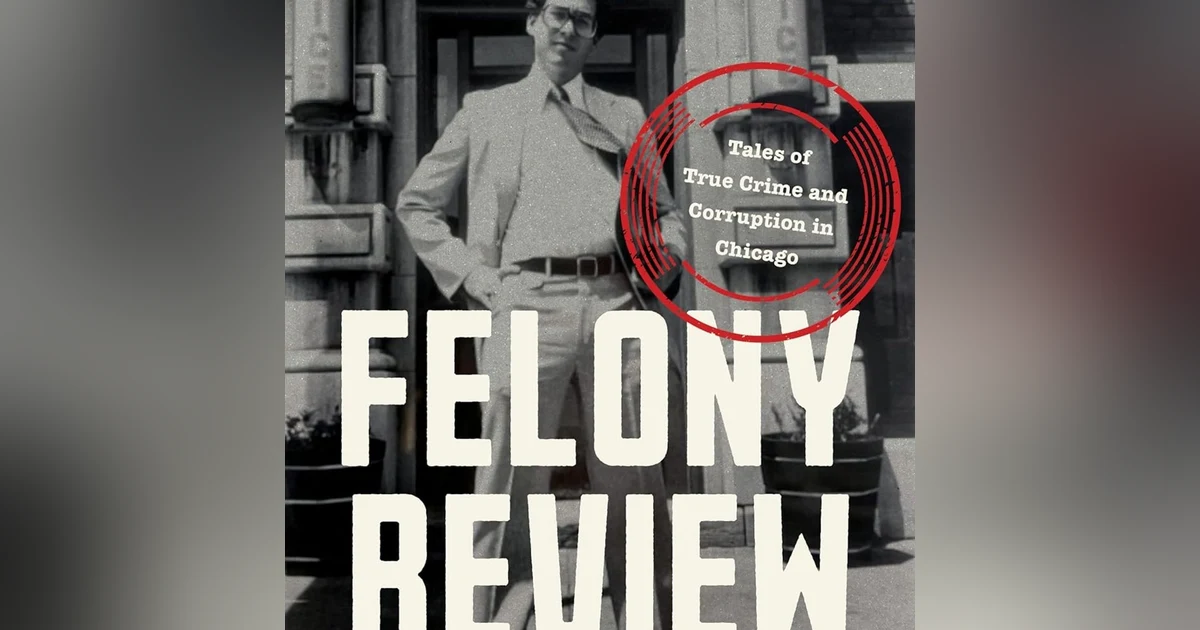
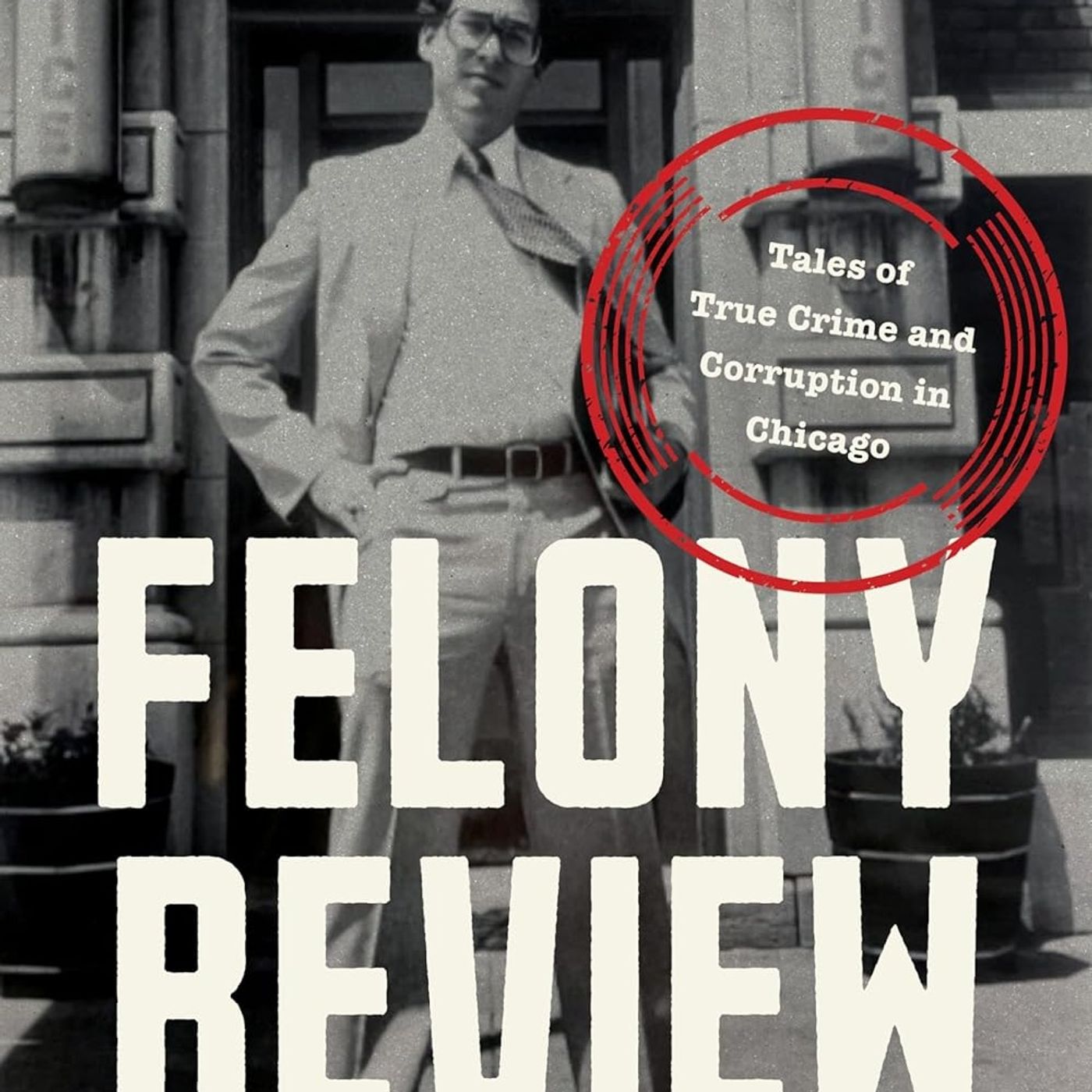
Today, I sat down with Randy Barnett, professor of Constitutional Law at the Georgetown University Law Center, Director of the Georgetown Center for the Constitution and former prosecutor for the City of Chicago. He joins me to tell me all about his latest book, Felony Review: Tales of True Crime and Corruption that gives a behind the scenes look at what it was like to work in the thick of the violence and corruption running rampant in 1970s and 1980s Chicago.
Randy Barnett walked me through his time in the Felony Review Unit, the violent cases he worked on, and why exactly are some people so willing to spill it all to the police. Whether you love true crime, want to be a lawyer, or are currently studying law, this book, and this conversation, are for you.
Get your copy of Felony Review, out March 17th:
On Amazon
Encounter Books
Barnes & Noble
Connect with us on Social Media!
You can find us at:
Instagram: @bookofthedeadpod
X: @bkofthedeadpod
Facebook: The Book of the Dead Podcast
TikTok: Bookofthedeadpod
Or visit our website at www.botdpod.com
If you enjoyed the episode, consider leaving a review or rating! It helps more than you know!
If you have a case suggestion, or want attention brought to a loved one's case, email me at bookofthedeadpod@gmail.com with Case Suggestion in the subject line.
Stay safe, stay curious, and stay vigilant.
0:01 Every story has a beginning, but not everyone has an ending. In the shadows of headlines and buried police reports lay the voices of the missing, the murdered, and the forgotten, waiting to be heard and have their stories told. This is The Book of the Dead, a true crime podcast where we remember forgotten victims of heinous crimes, reopen cold cases, re visit haunting disappearances, and uncover the truths buried beneath the years of silence. I'm your host, Courtney Liso, and every week we turn to another chapter, one victim, one mystery, one step closer to justice. Brought to you by Darkast Network in Deep Podcasts with the Twist. Hello, Hello, Welcome to the next chapter in the Book of the Dead.
1:16 With me today, I have a very special guest. Randy Barnett is a professor of constitutional law at the Georgetown University Law Center and director of the Georgetown Center for the Constitution. He is also a former state prosecutor for the City of Chicago, and he's joining me today to discuss his newest book, Felony Review, Tales of True Crime and Corruption that gives an inside look at the rampant violence and corruption of nineteen seventies and eighties, Chicago. Randy, thank you so much for joining me today. I'm very excited to have you. Well, I'm very excited to be on this podcast. You have such interesting cases that you talk about, and I don't know if any of my cases rise to the level of the ones you talk about, but I have a lot of them.
2:03 Well, based on what I read, you certainly have quite a few that definitely meet the level of some of the cases that I've covered. You have had a very interesting career, and that kind of leads me to my first question. You know, what led you to wanting to become a lawyer. Was this something you always wanted to do, or did your aspirations change as you got older. It's something I wanted to do since the age of ten years old, when a television show came on and I was a child of television. I watched a lot of TV as a kid, and a TV show came on called The Defenders. It was on CBS. I ran from nineteen sixty to sixty four, I think, and it was about a father son criminal defense team in New York City. Was filmed on location. It was very gritty, seemingly realistic. It wasn't like Perry Mason, which was already on the air when I was a kid, which was really about solving murders. This was a show about being a lawyer and the ethical challenges of being a defense lawyer in the criminal justice system in New York. It also explored a lot of social issues as well, and so I was fascinated by it, and so that's what I want to be. I never changed my focus, even when I went to law school and everybody was telling me that I shouldn't waste my degree by going into the criminal justice system. Something they say at Harvard, for example, become a clerk and then go to work for big law firm. And I said, look, I didn't go to law school to do something I don't want to do.
3:24 I went to law school to do what I do want to do, and that isn't be a local criminal lawyer. Now. One of the things that shifted in the course of my life was over to the prosecution side from the defense side. And that happened when I was in law school. And I discovered in law school that the duty of a prosecutor is to do justice. The first duty of a defense attorney is the zealous defense of their client. And we absolutely need defense attorneys. They're essential to the truth finding function of our system, of our criminal justice system. But I was more comfortable with the justice commitment that prosecutors have their permitments to do justice, whether that results in the conviction or a release of a criminal. I also tend to be constructive in my approach. I'm not a deconstructionist. I like to build things, and prosecutors build cases.
4:14 Defense attorneys tear them down and just dispositionally. I'm more suited to the building of cases. But probably first among all of these reasons is the fact that by the time I got to law school, I was convinced that the criminal justice system paid it inadequate attention to the victims of crime. And this was partly due to the fundamental principles of the criminal justice system, and that is that a crime is committed, and under our theory of criminal justice, it's committed against the people of the state or against the state. When I was a Cook County States Attorney in Illinois, my client I represented the people of the state of Illinois, not the government of the Illinois but the people of the state of Illinois. Well, where do victims fit into this? Believe it or not. Technically, victims are witnesses to a crime that has been committed against the people of the state, which is kind of a perverse way of looking at victims of a crime.
5:09 And I was very, very focused on the victims of a crime and wrote a paper that was published by my third year of law school in Ethics, which is one of the premier philosophy journals in the country, called Restitution a New Paradigm of Criminal Justice, when I urged that our criminal justice system be organized around compensation of victims rather than punishing the criminal per se. By the time I graduated from law school, I was really single mindedly focused on becoming a prosecutor and my dream job was to do it in my hometown of Chicago. And I got to do my dream job and it was, as I say in the book, several places better than TV. You do mention that several times, and I do want to come back to that, because, of course, you know, law shows are prevalent. Now you know you have Law and Order, you have all sorts of shows like that, so you definitely want to come back to that. But I really love how you really wanted to focus on serving justice to the victims because and it's not with every lawyer, every prosecutor that are very focused on the job and getting the job done, where I feel like the victim kind of gets overlooked in the sense that it's all about getting the conviction, getting whoever the perpetrator was convicted of the crime, and they kind of forget that at the heart of it is the victim who was impacted by the perpetrator. So I love that justice was such a forefront of your mind, especially when I focus a lot of my episodes on giving a voice
6:40 back to those victims. That's one of the reasons I was excited to be on your podcast, to be perfectly candid, that's one of the things that drew me to it. Oh well, thank you so much. That truly means a lot. That's something that resonated with you. So of course, corruption is a big theme in your book, and corruption was very rare in Chicago I've covered in the past. So you mentioned that it happens or you noticed it very early in your career. You know, what sort of things did you notice and how did you navigate that obstacle? Well, there are two kinds of corruptions. One is the one we think of, and the other one is the one people generally don't think of, and the second one is more pervasive. Frankly, the one that we think of is monetary corruption. People that get paid off or bought off, and that happens in the criminal justice system. It was happening in Cook County while I was there. The book tells the story about that corruption that I faced and what ultimately happened in response to that corruption, and the story has somewhat of a happy ending, which is kind of hard to believe you could have a happy ending in our criminal justice system. The other kind of corruption, which goes more unnoticed, is sort of the corruption of the soul, and that is a corruption that's based on people who know people. There was a saying in the criminal justice system you never know who you're talking to.
7:57 That was a cautionary tale about speaking too candidly to people. And what you never know who you're talking to is a reference to is that I might be talking to you, Courtney, but I don't know who your father is. I don't know who your brother or sister is, your mom, your father or your mom might be somebody who I wouldn't want to be communicating with. But if I tell you something, you're going to tell them, and therefore you never know who you're talking to. There's one anecdote I talk about in the case where a notorious case fixer named Dean Wolfson. I was getting my haircut and he was at the same place that he was getting his haircut from, and he came up to me and he said, you know, you should stop bad mouthing me, meaning accusing him of being a corrupt lawyer. Well, this took me aback. I couldn't believe it for two reasons. It's number one is I didn't actually specifically remember bad mouthing him. I mean, if I did, it wasn't often to many people. Yet I didn't know who I was whoever I said it to.
8:57 I was actually talking to Dean Wolfson unbeknownst to me. And the other thing that was funny was that he was so obviously well known to be corrupt. I mean, this was just widely known that it was surprising to me that he would care what I know one guy was saying about him, but obviously he did. So that was a good example of how I said something to somebody and it got back to him, So you never know who you're talking to. And that's the kind of corruption. So if you go up and I mean, here's the reason why, here's the payoff. When you're a prosecutor and you're pairing before a judge and there's a defense attorney standing next to you, what is the connection between the judge and the defense attorney. I mean, did they go to the same law school? They do they have relatives in common? You never know. And my job as a prosecutor is to ensure that whatever the connection is between the two of them, should there be any which I can't know about, I've got to prevent any kind of corrupt decision making happening out of favoritism, so kind of favoritism doing good things for the people that you know and you like, which is not the same thing as monetary corruption. Another form of corruption, one more form of corruption that I personally experienced and I talk about in the book. I think I even talk about it more in A Life for Liberty, which is the book that I published last year, which is about my overall career.
10:13 And that is the corruption you face when you were a prosecutor and you have all this power. Being a prosecutor is an extremely powerful position and one of great influence in Cook County and elsewhere, though especially in Cook County, and so for example, I would know that if I ever got stopped for speeding and I identified myself respectfully, I should say to the officer who stopped me, as a Cook County States Attorney, there was a very very good chance that he would let me go. And knowing you had that kind of privilege is corrupting. That is, you come to like it, you enjoy having that kind of privilege. And I know when I left the office after four years, it was a good time to leave, because the longer you have that privilege, the more it becomes a part of you. I felt the absence of it, I felt the loss of it. It was a security in noing that because I was a Cook County States Attorney, I had certain privileges or prerogatives. Bad things were not going to happen to me as much as they might happen to the ordinary person because who I was. That's the thing that is that the phrase power tends to corrupt, and absolute power corrupts absolutely. That's the kind of corruption that that praise is about, and I personally experienced it, and I think it's something that people need to take seriously about the people who are in government for their whole lives.
11:29 I agree, and especially because you would expect lawyers and judges to keep their ethics and justice and morals at the forefront. Do you think that the allure of power and the allure of that monetary gain or that bigger monetary gain flipped people more often than not towards corruption or do you think there were more people that held onto those morals. Oh, I think by far the overwhelming number of people held onto their morals without a question, especially in the Cook County States Attorney's office I served in. Notwithstanding all the corruption that was around me, there was virtually no corruption in the office I worked in, which which surprised me.
12:11 I came into the system pretty cynical. It was cleaner than I expected, because my office was cleaner than I expected. So I definitely think it can be resisted. I definitely think most people in the system are trying to do the right thing, which is something else that doesn't get depicted in popular culture about the legal system. Enough the defenders. Now I've gone back and rewatched it recently, and in The Defenders, you do have many instances in which the defense attorney, the prosecutors, and the judge are getting together off the record, sometimes in like a club or a like a workout club that they're in and they're trying to figure out what to do with some really difficult case and handle in an affair and way. And even though that was fiction, it does reflect a lot of what goes on in the system. I also like to say that My Cousin Vinnie is my second favorite lawyer's movie.
13:00 And if you'll notice, they don't make the prosecutor out to be a bad guy in that case. He's doing his job. Vinnie's doing his job. At the end of the day, the prosecutor helps Vinnie do his job, and the prosecutor doesn't take it personally. When Vinnie ultimately beats him, the prosecutor stands up and says, you know, motion state dismissed very proudly because he was happy to do it. In that sense, and I think that more reflects the criminal justice system I was in than some of the more downbeat accounts or the criminal justice system. I agree. I think I think a lot of shows and movies now definitely portray prosecutors as being the bad guys, which of course makes for great TV. It does it's fun to watch. What I do think it casts a negative light on prosecutors and defense attorneys a light. Defense attorneys are always portrayed as kind of the seedier ones, the grettier ones, So I don't think it's necessarily fair, but it does make for good TV. But it's refreshing to see the shows and the books like yours that portray them how they're supposed to be, whether by firsthand experience or otherwise.
14:04 Well, as you know, at the end of the book, I added as an appendix or as an afterward two letters that I wrote to MTM Productions, which was Mary Tyler Moore's production company run by her husband Grant Tinker, and they produced both Hill Street Blues and La Law And after Hillstreet Blues came on while I was still a prosecutor, I wrote like an eight page single space letter kind of criticizing their characterization of the prosecutor who had not yet made an appearance on screen yet, and went through the history of how prosecutors have been depicted in lawyer shows unrealistically. And then when years later, when LA Law came on, I was already a law professor, I sent a follow up letter arguing again about their mischaracterization of what the prosecutors are like, and I got very respectful responses from them. But I put the whole letter in my book because it's my breakdown of how prosecutors or lawyers are depicted. And I would say to generalize lawyer shows other than Law and Order, which is so much different. Lawyer shows, which are usually organized around the defense attorney being the hero, have prosecutors being the bad guy and usually the defendants are innocent, whereas cop shows are organized around the cops being the good guys, and usually the suspects are guilty, and the prosecutors, if they're there at all, are probably okay, they're neutral, they maybe they just get in the way of the cops doing their job, so to speak. And so if I'm going to pick a jury, I want jurors who like the cop shows, not jurors who like the lawyer shows.
15:29 That makes a lot of sense, I agree. Where there are times where the corruption hit a little bit too close to home for you, and how did you handle processing that knowledge that many of your colleagues and judges that you were presenting cases to were corrupt. Well yeah, I mean I had a case fixed out from under me, which was pretty painful, and that made me so angry that I went down to my supervisor's office after this happened. It was an auto theft court, so it was a preliminary hearing in a felony auto theft case, and there was a finding of no probable cause as a result of the testimony given by a cop who testify to how illegal their search had been, which of course is not something cops typically testified to, but they do when they've been paid by the defense attorney.
16:18 It turns out that, for reasons I explained in the book, we realized that the judge was in on this because he had to change his rules of evidence to allow the cop to say these things, and so that's how we knew he was implicated. So I was so angry. I went down and I said to my supervisor, who was a former Chicago police officer before he went to law school to become a prosecutor, I said, you know, Dennis, I'm so upset about this that I know this isn't good for me, and I know it's if you can give me some reason for me to calm down. I think I can do it, but I need some give me a reason. And he said, okay, he was a very gruff talking guy. I'll give you a reason. The reason is is that defense attorney ever finds out how upset you are him for having fixed this case, he will forever use it against you when you're in court against him. And he says something to the judge like, well, the prosecutor's not arguing this because he believes that he's arguing it because he doesn't like me, your honor, And I said, well, thank you, Dennis for that. That's all I needed. I now can calm down. And I did calm down after that. And there's another saying in the criminal justice system, and that is you don't get mad, get even. And the book tells a story about how, several weeks later I was able to get even with that defense attorney by depriving him of the opportunity to fix a second case out from under me.
17:34 That was very satisfying to read about. I enjoyed that very much. A bulk of your book talks about your time in felony review. So for those that don't know, can you explain what that job entails and what are some of the things that you did in felony review. Well, I went to be a prosecutor, to be a trial lawyer, be a criminal trial lawyer, and I did get to I fortunately got to be a criminal trial lawyer, a felony trial lawyer, trying to for two years before I left the office. But along the way you have a lot of assignments, and one of them turned out to be very formative to me, and that is the Felony Review Unit in Chicago, which is quite unique. I don't really know whether this exists elsewhere in the country, but a deal was made between the elected States Attorney years before I became a prosecutor, and the Chicago Police Department, and that is that the police department would not be able to bring felony charges against anybody unless it had been approved by an assistant States Attorney by a member of the State's Attorney's office. Now, there were some exceptions to that. Drug cases were not included. For example, that it was the rule, and in order for the prosecutor's office to satisfy that rule, they had to create a special unit which did nothing but evaluate cases that were brought to it by the CPD by the Chicago Police Department, and the similar situation of BISUAI also exists in the suburbs the Coller counties that are part of Cook County around Chicago. I just was in Chicago myself, and so before a felony complaint can be filed, a felony review assistant has to review it. Now, in order to have
19:06 this unit, you're signed to it full time, and you're signed in twelve hour shifts, twelve hours on, twelve hours off, twelve hours day shift on three days in a week. Then you have three days off, and then you switch to the night shift. You have twelve hours six pm to six am the next day. So you do it three days on three days off. It can be kind of a grueling experience. And your offices are not in the courthouses. They're in the police area headquarters. So you have your own office in the police area headquarters. And then you have your own squad car and you respond to whatever police district the person's been arrested at in order to evaluate the cases. Now it's not all you do. You also evaluate search warrants, and you also serve as an advisor to cops who come in and ask you your opinion about stuff, and so it was an extremely important job and one of the most interesting jobs I've had in my whole life. And this is the reason why I named the book Felony Review after that unit, even though the book is about both that and being a trial oil here.
20:01 You evaluated some really interesting cases in Felony Review that I read about in the book. Can you talk about some of those cases that really made an impact on you? For me personally, the story of mister and Missus Kim and the liquor store, that that was quite a case to read about. And you had mentioned something in the end where she had said that you know, she hopes to bloom in America and that you hope she does, and that was just that was so beautiful and that resonated so much to me, especially just knowing the details of that story. So, what are some cases that really impacted you? Well, there's that one, and I should say for this book. One of the most satisfying parts about the book going back, and it was originally supposed to be several chapters of my previous book of Life for Liberty. But that book got too long, and I pulled these chapters out. And then because I pulled it out and made it into a freestanding book, one of the things I did was research the victims and what happened to them afterwards, more about them. I researched the other participants in the system, the other lawyers and the judges, so I got more background.
21:05 I was able to put all this background in the book that wouldn't have fit in the other book. And one of the things I learned about was her because there was a Chicago newspaper columnist who did two stories about her and interviews with her, and I was not privy to that when I was dealing with the case. My involvement in that case ended in the police station after the defendant was charged. Because I was a felony review assistant. I was not the person who tried the case. And my participation consists and otherways. Tell you, your listeners, the facts of this case. The defendant, Seesar Marin, was a Colombian immigrant who was a patron of this liquor store that were run by this Korean couple, the Kyms, and one night he was on his own, and he got himself quite drunk, or at least according to him, he got himself quite drunk at the lake front, and he came back to buy some beer more beer at the liquor store before they closed. He saw they were closing up. He'd worked in that liquor store before, and so he knew what the layout was. And he realized that they were just the two of them, and he just pulled out a gun, which he brought with them to the lakefront, and he held them up. He telled them to go down and downstairs into the basement. And then, according to him, because I took the confession from him, so most of what we know about what happened, most of what I knew about what happened came from him. Afterwards, reading the story, I got Missus Kim's side of it better.
22:24 And I'll say for a minute, why I didn't have her side? So head her downstairs, and he said he thought he saw mister Kim make a motion in his direction, so he started shooting at him, struck him. Mister Kim died of his wounds. He also shot Missus Kim, who he then left for dead, went upstairs, closed the door, put a piece of wood or bar to pry the door closed so it could not be opened from downstairs and left. Missus Kim survived the attack and crawled up the stairs, was able to somehow dig her way out through the wall by breaking out through the wall and to get help call up to get help for her and her dying husband, and she was then sent to the hospital. By the time I was involved in the case, she was hospitalized and really not all that able to communicate, so I didn't really get her whole side of the case until I read the article that I read to put this book together. One of the most noteworthy things about this case and the importance of felony review as a means of protecting the innocent, is that missus Kim did supply the name of her attacker. The cops went out and arrested Saesar. Marin Or arrested Saesar, and my supervisor said, well, has she identified him? And I said, well, not yet, she said my supervisor on all murder cases.
23:39 We responded, we were basically in consultation with our supervisor for murder cases, and they said, well, you have to get a lineup, you have to get her a ID so I told the cops we have to get an ID, and they were a little reluctant. They had a guy that fit the description, had the right name, but they did it and we went to the hospital. That wasn't the right guy. It was the wrong caesar. They had to let him go. They went out and captured eventually the right guy. I then went back to the hospital to get the ID of the right guy. And that was a very dramatic scene worthy of TV. And that is missus. Kim is laying with a tube coming out of her nose and she's sitting in a hospital bed. She was kind of in a delirious state for weeks.
24:21 And I handed her the five photographs. It was a five photograph lineup I d and she went through each photograph and then when she got to the one of Sesar Marin, she started reacting to it physically, and I remember the fluids started running out of the tube that was up her nose as she pointed her finger violently at that picture that that was him, that was him. In addition to that ID, we also had the weapon and we had the proceeds of the robbery as well. But I was there then to take the confession, and so I took the confession from him. And as you'll know from reading the story, the reasons I tell the story of the full confession I took with all the details is that I almost blew the confession by not giving him his Miranda rights before the confession, and what happened, and how I was able to somehow fix that because of the advice of someone else I was training that day, and so that there wasn't even a motion to suppress the confession. It was all perfectly okay. But I had overlooked giving him his Miranda warnings because I was so conscious of the fact that later on defense attorneys would claim he didn't speak English, that I wanted to make sure that there was a Spanish speaking officer in the room that could translate anything he had a question about.
25:40 And as I was explaining to him all that on the record, it interrupted my normal flow, and I then didn't go and give him his right to remain silent, right to have a counsel, all that stuff. So I just went past that, and I didn't discover it until the end of the confession, when I'm sitting there trying to think of is there anything I've forgotten. I realized, you know, I don't think I did that. I asked the the guy I was training, and I asked the investigating officer who was there, did I did I give him as Maranda rights? And they go, yeh, we think you did. And I asked the court reporter who was there, did I give him as Mariana rights? I think you did. I said, well, would you go back and look? So we went back in his tray with his print out and he said, you didn't do it. But I was at a complete loss now, I mean, I was like, you know, inside, it was kind of panicking, what do I do? And the guy I was training, who now is a circuit court judge. I think he might have just retired, but he was. He went on to be a circuit court judge. He said, he advised me how to fix it, and I did what he said and it fixed it. And what I did, if I'll give this one away, I'll give this ending away. What I did was because I had given him as Miranda warnings before he orally confessed to me. I just hadn't done it on the record for the court reporter confession. And so I said, well, Sazare prior to speaking with me the first time. Did I advise you that you had a right to remain silent? Yes? Did I advise you that anything that you said could be used against you? Yes?
26:59 Did I advise you had to write to attorney? Yes? Did I advise you that should you not be forward to attorney, one could be a provider for you. Look old, Abitstrei Hira, I still remember the warnings, and he goes, yes, So I retroactively gave him his rights by pointing out how he had previously been advised, and that fixed the error. But in the book, I try to focus on the mistakes that I made as well as the good decisions that I made as learning exercises for the reader, especially if the reader is a law student or somebody who would like to be a lawyer one day. I really loved that you added in those moments where you made these errors, especially with the Miranda warning, And I remember reading that and you mentioning did I give him Miranda warning? And almost panicking for you, because you, you know, as just an average person, or besides the fact that I spend a bulk of my time researching true crime, like you know, how important, that is. But speaking of the Miranda warnings, you know, could you talk a little bit about out why they're so important and how they're so valuable to a court case.
28:07 Absolutely. Now, the theory of miranda warnings are that you're not supposed to be compelled to testify against yourself under the Constitution, and so it's a violation of your Fifth Amendment rights if you've been coerced into talking to the police. So Miranda warnings are what are known in the business as prophylactic warnings. That is, they prevent misconduct by advising defendants who may not know what their constitutional rights are what they are, so that they can exercise their right to remain silent because they're being told they have such a right as being as opposed to not being told they have such a right say well, you got to talk to us. So that's the idea of them, and I think they do have that effect to some degree, maybe not as much as people might imagine. I think people talk to the police regardless of whether they've gotten their Miranda warnings if they feel like it's in their interest too. I talk a lot about why people confess to the police in the book, I think the biggest effect that Miranda warnings have is on the officers who have to recite them, because prior to that somewhat open season on police interrogation techniques. Pretty much anything was fair game in the bad old days, but prior to me being a prosecutor, because I was a prosecutor post Miranda, post the Constitutional rights Revolution. But I think what the Miranda warnings do is create a psychological state in the mind called cognitive dissonance, which is cops are saying to people all day long, you have a right to remain silent, you have a right to a lawyer, and that reminds the cops that people have a right to remain silent
29:38 and a right to a lawyer, and so their behavior corresponds with what they say. That's what cognitive distance. It is. When we say one thing and do something different, it makes us uncomfortable. We like to reconcile that by making our actions consistent with what our words are. Sometimes it's by changing our ideas to conform to our actions, and sometimes it's by changing our actions to conform to our words. And I think this makes cops more rights conscience that they ever were to respect people's rights. And it also bolsters the honest cop. So let's say that there's a you know, a station house full of cops, and many of them would respect people's rights. They're happy to others say no, no, no, we've got to be tough. We don't care about that. They're the bad guys. We can do what we want. Well, there's a certain amount of peer pressure involved in getting cops to act like the tougher Cops act, or you know, say you're not being tough enough. Well, if you have to say Miranda rights all day long, that bolsters the resolve of the cops that will respect the rights of the of the accused by saying, well, look, they have rights. You know, I have to say it, You have to say it, we all have to say it. And so I think it has definitely contributed to cleaning up the criminal justice system to the point where when that was something I didn't really see. When I was a prosecutor, I didn't see coerce confessions. Now, I'm not saying none of the confessions that ever made to me were not coerce. Before I got there, it's possible they were. So I can't claim that because my experience is a hundred true. But if there had been rampant coercion, I think I would have caught a wind of it in a way that I didn't.
31:08 So again, I'm not saying cops don't do it. I'm just saying it had a very salutary effect on the criminal justice system, and I think it's a good thing. Having said that, I've just written an essay I talk about this in the book as well about the exclusionary rule, about how why violating these constitutional rules should not prevent law enforcement from being able to use the evidence. That's what the exclusionary rule says. If you get a statement that was coerced, you can't use the statement. Well, a core statement might not be reliable, so there might be a good reason not to use it. But if let's say you uncover physical evidence but you don't have probable cause for your search, but you find the murder weapon and the bloody remains of the victim and all the rest, but you didn't have probable cause for the search, well, all of that physical evidence has to be suppressed. There's another case in the book where I talk about the Henry Lee Thomas case in which all the physical evidence of him murdering his girlfriend, Dorothy Harrol in the middle of the night and dumping her body in a forest preserve later on had to be suppressed because the cops didn't have probable cause for their search. My view is that that evidence should be available to prosecute them, but we should have a separate system solely dedicated to compensating victims of police misconduct who've had their rights violated with monetary compensation. And so one of the problems of the exclusionary rule is only the guilty get to assert it.
32:28 Only if there's evidence of guilt. Do you get to suppress the evidence of guilt. The remedy's suppression, Well, they've got to suppress something. And if the person's completely innocent and they've been searched, that driving down the street and their search and nothing's found, they've got no remedy because nothing was found. So only the guilty get this remedy, the innocent don't. And I would like a system in which innocent and guilty alike can get a compensatory remedy, while at the same time the criminal justice system can make use of the evidence that's found. I agree with that. I don't think it's fair and that you know, this evidence can be suppressed, can't be used because of if it was on ethical and how it was obtained, or you know, there was no probable cause.
33:11 But it's impacting the victim in a negative way, either by completely ruining the case or it is, like you said, impacting someone who may have been innocent, but there's nothing to suppress. So I do agree that that would be a very good solution because in the end you could still use this evidence within specific constraints, but also the person that it's impacted directly gets compensated in some way for having their case impacted so deeply. Right, And of course the general public pays by having guilty dangerous people re released into the community.
33:54 Absolutely, and that at the core is what no one wants. Right, as you mentioned, you speak openly about suspects being so willing to give confessions to police, you know, innocent or guilty. Can you kind of explain why that is why someone is so willing to talk, especially now when you hear a lot of people say, you know, don't talk to the police, get a lawyer, Get a lawyer, Get a lawyer. So what is your perspective on that, Well, that by the way, is the advice I give people too, don't talk to the police, get a lawyer. Get a lawyer for lots of reasons, And that's a different topic for a different show. So I think that's usually good advice to follow, except where it's not. I mean, there's exceptions to every rule, but generally speaking it's good advice. But why do they Well, I found there were several different reasons I got from sort of an observation observing people talking to me. The most important reason why people talk to the police who are guilty is that they think they're talking themselves out of the crime, when they're really making the job of the prosecutor easier. So, for example, if in order to talk themselves out of a murder, let's say a person is and killed and it's part of a group thing or something, and the person that's arrested says, well, I was there, but I didn't shoot anybody, and I didn't kill anybody. Well, what that person has just done is eliminated identification as an issue in the case.
35:14 No longer we have to worry about fingerprints, no longer we have to worry about the reliability of eyewitness identification. They've admitted they were there. Now we just have to decide, you know, were they culpable for whatever happened. You know, maybe they did pull the weapon, maybe they didn't. But I mean, I have the case of the King brothers who killed the former cell mate of Robert King. George and Robert with the brothers, and they killed the former cell mate in Illinois State Penitentiary of robber King named Gregory Perkins. And each brother confessed to the police and each said the other guy did it. Each said, yeah, I was there. We robbed the guy, but my brother is the one that stabbed them to death with the scissors. And so I tried both of those cases separately. You can't use a statement that accuses somebody a co defendant of guilt because the co defendant can't cross examine the maker of the statement because you're defended. So you have to try those cases separately. For so, first I tried Robert and then I tried George, And so those confessions put them both at the scene, both participating in the robbery.
36:10 It legally speaking, it didn't matter which one actually did the stabbing as long as one of them did. So those guys were trying to talk themselves out of a murder cards and they talked themselves in to a murder conviction. And now that's the first reason. People think they're talking themselves out, but they're talking themselves in. The second reason is Caesar Marin, the one I already talked about. My impression of Saesar was and from what he told me, he felt really bad. He felt bad about what he did. There are criminals, and there are criminals there. Criminals are diverse. Even said in his statement to me that's in the book, that he lost sleep, and he said, I just kept thinking about the man. I kept thinking about the man. Confessing was like confessing to a priest. It was like a way of alleviating guilt was to confess. And that's the impression I got from him. And then there was Juan Caballero, the first case I talk about it at the beginning of the book. We won't go into the details now, perhaps the most memorable of all the cases that I took statements from. And I think Wan, who was a young, clean cut kid, I can't remember now, twenty years old, I say in the book how old he was. I had very little record, hardly any record at all, and yet he full confession to a brutal slaying of three young men by four members of the Latin Kings, of which Juan was a member. I think he would have considered it to be unmanly to not admit to what he had done. I mean, he was sort of proud of what he did. He sort of thought he did the right thing, given the fact that these kids had claimed to be Latin Eagles and written on hits to Latin Kings, and so he was not ashamed of what
37:41 he did, and to have denied it would have been to sort of indicate that he was ashamed. That he wasn't ashamed, and so being proud of what they did. By what you do is a third reason. It's pretty unusual, but I think his confession was a good example of that. I agree, And I think it's interesting saying because of course, you see the people that you know, they talk because they're trying to talk themselves out of it. You have those like Cizar Marin who obviously felt a deep sense of guilt. I think he felt remorse, yes, and I do believe he was absolutely looking for some sense of absolution in what he had done. And I think that's very common as well. But those that do it as kind of like a way to brag about what they had done is always just so astounding to me that someone could have just such a deep sense of anti morality.
38:40 It's astounding, but it's motivated, I think in that case by kind of a code that the guys that got killed, while you know they were they committed an affront against the Latin kings, and they kind of deserve what they got and that's why we did it. And so that he was adhering to a code. Again, I think that's somewhat unusual. The people that don't talk to the police are generally people who have done hard time. They got hard time because they did talk to the police, and they've had years to kick themselves and be told by everybody else whatdo in the prenitentiary, what idiots they were for talking to the police that by the time they get out, you know, when they hear to see a cop, they just clam up. I couldn't get to square one with those guys when I was faced with a hardcore having been to the penitentiary for many years, repeat offender, they were stone cold and they just looked at me, and there was nothing I could do to get them to talk.
39:32 I believe that. I believe that they learned their lesson. They learned their lesson. After you left Felonie Review and you became a prosecutor for the state, what sort of cases did you try? Were they similar to what she's out with in Felony Review or were they vastly different? Oh, they were similar. I started off before I went to fellow In Review as a misdemeanor courtroom lawyer, trying misdemeanor cases, which are I think very serious. I think one of the problems with our criminal justice system then is that we don't take misdemeanor seriously enough. Their crimes punishable by up to one year in jail, and yet they're treated as like sometimes like traffic offenses, and they really I think if we took misdemeanors more seriously, we'd have fewer felonies to worry about down the road. But that was my first experience.
40:16 Then. When I got out of Felony Review, I was a felony trial court prosecutor prosecuting the cases that had come out of Felony Review by that had been vetted by somebody else, And so yeah, I got to take pick up the ball from whoever the felony review assistant was and run with it in court and hope the felony review assistant had done a good job in making sure that all the evidence that was available that could have been made available back in the police station, was made available to me as the prosecutor. So I had lots and lots of bench trials, but the jury trials I had, I had half of my jury trials were murder cases and of the remaining half, they were sexual assault or rape cases. So that was the mix of cases I had as a felony trial assistant.
40:57 Were there any cases that you came across as as a prosecutor that came from telling a review that when you were looking over it, did you find any problems? Like, you know, it's not how you would have done it, or it wouldn't have passed you if you had come across it in felling your right? None? None came to mind when I wrote the book, and so I would have to say, as I sit here, I cannot recall that ever happening. I recall people bitching about other cases they had, and you know, calling up a reassistant, and that was the thing when I was on Felony Review. The last thing you want to have happened is get a bad phone call from the guy who catches the case that you vetted and say, what the heck were you thinking? How could you do this?
41:39 We never we on Felony Review never wanted to get that phone call, and I never got that phone call. But when I got to the Felly trial course, I can't think of an example of when that happened. Frankly, but I think one of the things that I do make I do stress in the book about Felony Review, and I already alluded to it earlier a bit, and that is my job was to figure out what would a criminal defense attorney do with this case? What are they likely to do now? For example, because I thought, even though Sezar Maarin spoke good English, I could imagine in a confession case that later on a defense attorney would say, oh, well, that he didn't speak English, that confession was made up by the cops. Because my client doesn't speak English, and at trial, there's not going to be any way we can prove easily he speaks English, because he's not going to say anything. He's just going to sit in court, right. Well, that's the reason why I went to great lengths because I anticipated that as a possible thing for the defense to say. I went to great lengths to have a Spanish speaking officer in the room for this person to talk to in case he didn't understand anything I was saying. And by just introducing that element, it would help prevent a defense attorney from making up that kind of defense later on. In the case of Juan Caballero, my concern was, this is a good looking, clean cut guy, young man with very hardly any criminal record, and he would the defense was going to be that, well, you know, he just got swept up in the moment. You know it. It was
43:11 the other guys, and he just got swept up in the moment, and you know, go easy. I mean, maybe he's guilty of something, but go easy on him. It was a death penalty case, so maybe, you know, I was anticipating that would be the defense, or that would be that could be a defense. And so after I wrapped up his court reporter confession he'd signed it, initialed every page, which is what they do, I turned to him and I said, well one, if you had it to do all over again, would you do it again? And he said, well, if it was a sure thing. And I said, well, there ain't no such thing as a sure thing. And he said, well, a lot of kings have killed people without getting caught by kings. He met Latin kings. And I said, but you got caught. Would you do it again? And then his answer was, well, I'd have killed Michael. It was the first person, the guy who had the big mouth. I'd have killed Michael for sure. I don't know about the other two. And not only did that play with the jury who had to decide the case. But as you saw from the book, it was I find I discovered when I researching the book that the Court of Appeals denied his appeal. The Supreme Court of Illinois denied his appeal of the death penalty sentence in part because of that testimony, which they quoted verbatim in their opinion, which.
44:16 Was another very satisfying moment to read about. I have to do. I want to give all the satisfying moments away. There are plenty. There are plenty in the book, and there's I already know we're not going over it because it's just it's too important. But it was. It was astounding, So talking about the surprise ending. Yes, So for those listening, you have to really do. You have to read the book. It is quite literally better than TV. After your career as a prosecutor, you moved on to being a scholar. What led to that transition, Well, it actually predated that ambition, predated my becoming a lawyer, and that is when I was in college, came enamored with philosophy. Where I grew up in the South suburbs of Chicago, I'd never heard of philosophy. I didn't know what it was. I got to college because I was interested in justice and politics.
45:11 I became a political science major at Northwestern until I discovered that polysci was all about statistics and empirical studies and stuff that wasn't what I was interested in. And then, for whatever reason, I took an intro to philosophy class in my second quarter and I discovered there's actually a discipline about justice. Now, remember, justice is what motivates me, has motivated me since I was ten years old, and it turns out there's a whole discipline ethics and political theory that's all about justice. So I switched my major and became a philosophy major, and was tempted by the idea that instead of being a lawyer, maybe I should become a philosophy professor and I could write about justice. But for whatever reason, reasons I outline actually in Life for Liberty, I tell the specific reasons why I didn't do that, and I stuck with plan A and became a lawyer. But by the time I applied to law school, and I'd forgotten this. When I went to write that book, I thought, I thought I had the idea to become a professor sometime while I was a law student. But I found my law school applications, and I see that in my law school applications, I told the law schools I wanted to be a law professor one day when I would teach about jurisprudence and justice. So apparently I had that idea going into law school, and so it was a matter of time in which I would one day segue out of being a criminal lawyer, which is what I went to law school to be my dream job, into being a law professor. But that's because my interest is the same. Instead of doing justice, case by case retail.
46:34 My goal is to try to make the legal system more just as a whole by talking about that as a scholar. An academic trying to improve the legal system so we get more justice for everybody. That's the core thing that motivates all my scholarship. And I think that's an amazing way to go about it, because, as you said, instead of going case by case, you kind of work on it as a whole for the bigger picture. In the system, there's nothing you can do about the system. The best you can do is try to play the system as well as you can to get a just result. But you can't change the system. Everybody knows that as an academic you can advocate radical changes to the system, and that's what I do.
47:19 Which is an amazing thing to do. For any budding lawyers out there, whether they're in law school or you know, they're thinking about entering law school or being a lawyer, what advice would you give them? First of all, it's great, it's not for everybody, and so don't just do it because people telld you yo, you know, you like to argue you should be a lawyer. You have no idea how many people I've heard tell me that. I've been told that many times. You should be a lawyer. You love arguing. Yeah, that's not a good enough reason, you know. So there's lots of other places you can argue it's a great career. There's so many different things that lawyers do. But so there's lots of advice I could give. So I guess the one that's relevant to this podcast is if, like me, you go to law school because you think being a criminal lawyer is what being a lawyer really is about, which is what I thought, don't let them talk you out of it, because it is better than TV.
48:13 And if that's really what your passion is, don't let them convince you that you're wasting your degree. Again, that's what they told me at Harvard Law School. I'd be wasting my degree if I went and bought became a county prosecutor in the Cook County State's Attorney's Office rather than something a lot more prestigious than that. That's way down the hierarchy of prestige assignments in the academic world. In Cook County it's way up the ladder of being an extremely important thing. But in academia it's way down the ladder. Don't let them talk you out of it. Do what I did, and that is do what is going to make you happy. Do what your passion tells you to do. But there's one other little piece of advice. This is actually serious advice. Even if you're going to do that, contemplate what your excess strategy is going to be.
48:58 My excess strategy was to me to be a law professor. And what I didn't know is how hard a job that is to get. And I was barely able to become a law professor. I just snuck in by the skin of my teeth. Most people that's not their option. Think about what it is you want to do afterwards, because that might influence your choice going in. Once you become a criminal lawyer, you've not limited your options. If what you can be later on and you can be a judge, you know, you could be a defense attorney after you're a prosecutor. There's things you can do, but you can't do everything, and so think about what your long term future is and if you make this immediate choice, that's something else you need to think about. I think that's really good advice that people need to look towards what happens after as opposed to their immediate future.
49:46 So Felony Review comes out on March seventeenth, when it releases, where can people find it? Well, at all places where you would normally buy books. Of course, I buy most of my books from Amazon, and it will be on AM. I believe the presale price is twenty nine ninety five. You can lock that in and it's got pictures. I also I always liked to I have books with pictures, and it has a If you go on Amazon, you'll see the picture of me on the cover. When I was in Felony Review, I was so it was like, you know, if you write a book like this, you would sort of like you think if I had had a time machine and I could go back in time and take a picture of myself in this job, so I could put it on the cover of this book. I wrote, Well, it just so happens. There is a professional picture taken of me by a very well known Chicago photographer, Kathy Rischlin, who took this picture of me for a cover story that was being done on Felony Review for The Chicago Reader.
50:42 And it's a picture of me in front of a police station that I put on the cover. For some reason, my publisher didn't want to put it on the cover, and I said, this has to go on the cover. It's on the cover. And I'll tell you just one story about that picture, and that is she took me to this police station had a very old police station FACI. That police station was not a working police station at the time. It was being used for some other purpose, but it still had this facade. She knew about it. She took me in front of it, and when I was standing there getting my picture taken, she didn't like the way I was standing because I wasn't standing in a macho enough way. So she told me to just, you know, separate my feet and sort of stick out my pelvis a little bit. And so the pose that you see on that picture was how I was posed by the female photographer. This was not necessarily the way I would have It was not the way I was naturally posing myself. So that's kind of the backstory of that picture. That's a good story as well.
51:36 But all of the stories in Felony Review were so fascinating to read about. I thoroughly enjoyed my time reading it and For those interested in getting a copy, the link to purchase will be in this worst notes below. I urge you to get a copy. It's a really great read, especially if you're interested in true crime and you're interested in just practicing law or what it's like to be a lawyer. But Randy, I think you so much for joining me today. It has been an absolute pleasure talking with you. Well, Courtney. I so enjoyed it, and I feel very privileged that you decided to include me in your real pantheon of amazing stories that you sell on this podcast every week. That just means really, that means so much to me.
52:17 Thank you so much for everyone else listening as always. I hope you have a wonderful week and I will see you in the next chapter of the Book of the Dead. Bye, guys. Another page closed. But the story isn't over for the families left behind. The pain doesn't end when the headline's fade. And for the victims, we owe them more than silence. For our on salt cases. If you have any information, please reach out to local authorities or visit our show notes for links and resources. Someone out there knows something, maybe it's you. Thank you for listening to the Book of the Dead. If this glory moved or spoke to you in some way, talk about it, share it, keep their names alive. Until next time, I'm Courtney Liso. Stay safe, stay curious, and stay vigilant, and remember the dead may be gone, but their stories will not be forgotten,
