

 Apple Podcasts

 Spotify

 Castro

 RSS Feed
Chapter 103: The Crime That Appalachia Forgot-The Nancy Morgan Murder w/ Mark Pinsky
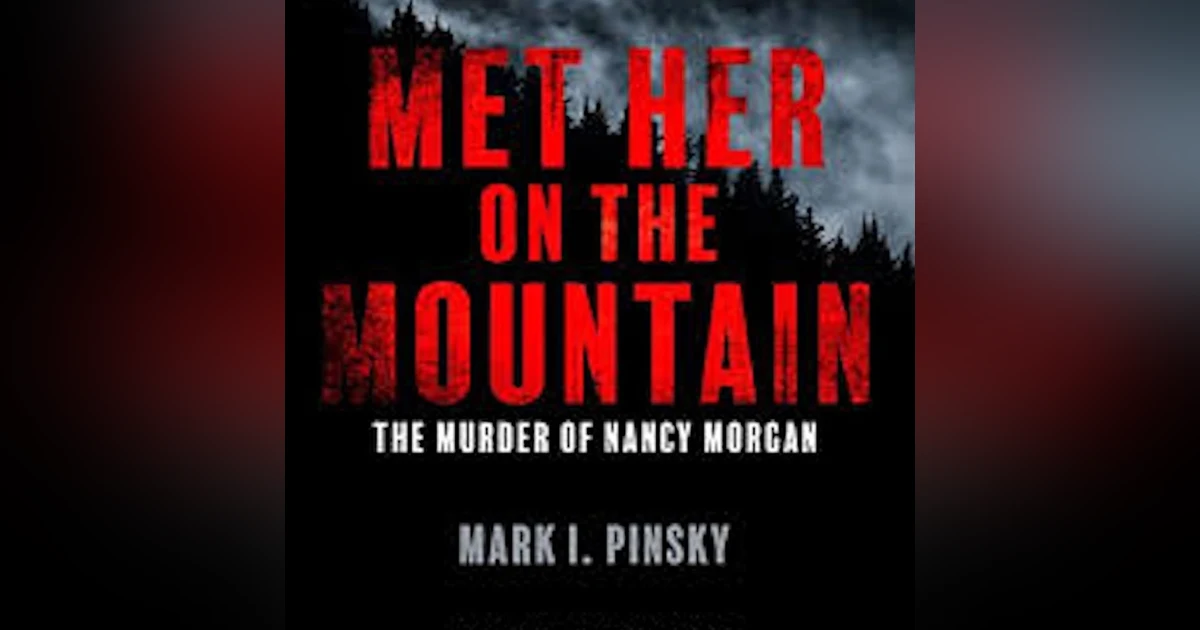
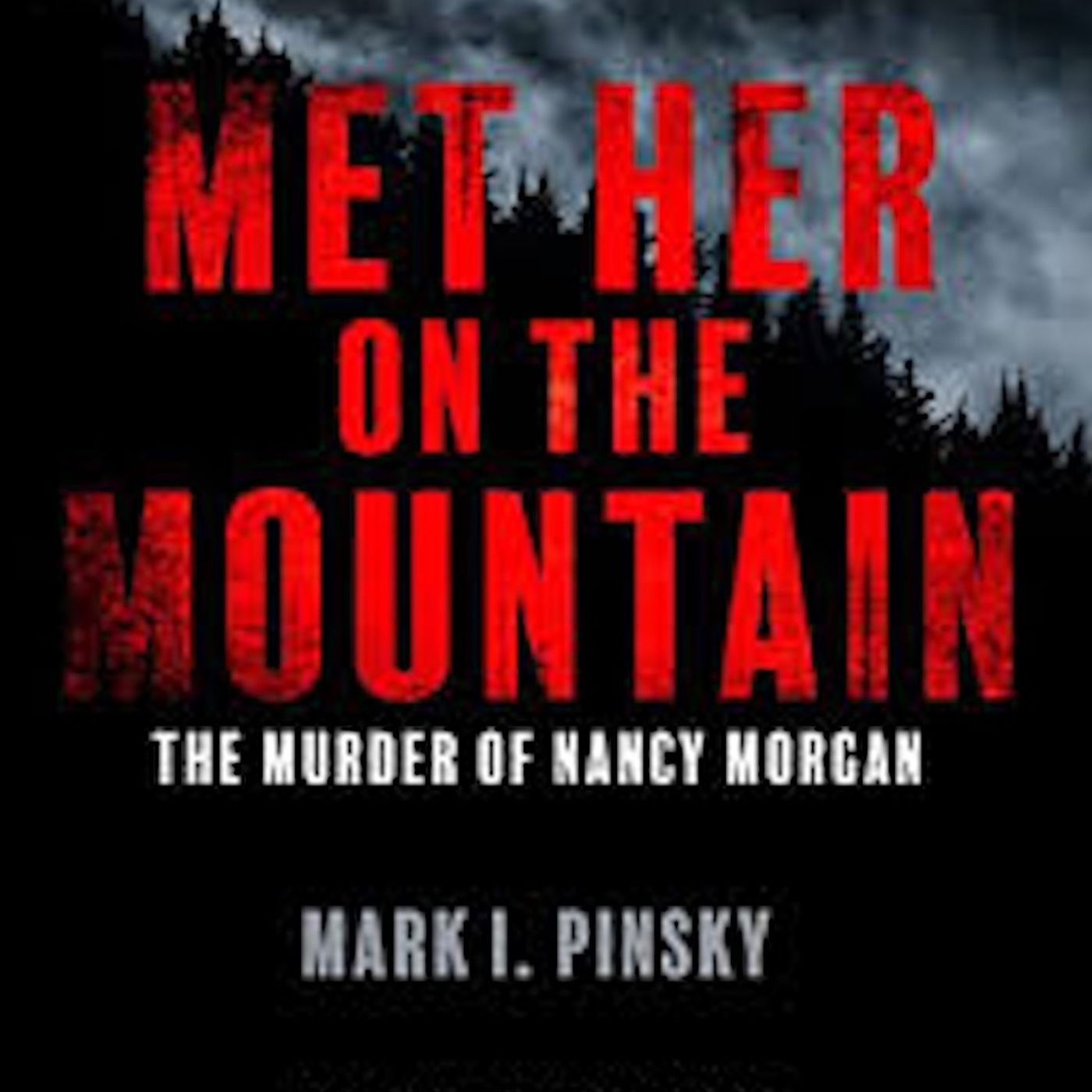
In Today's episode, I am joined by veteran investigative journalist Mark Pinsky to unpack the decades-old mystery of Nancy Morgan, a young VISTA volunteer found brutally murdered in Madison County, North Carolina in 1970. Mark walks me through the...
In Today's episode, I am joined by veteran investigative journalist Mark Pinsky to unpack the decades-old mystery of Nancy Morgan, a young VISTA volunteer found brutally murdered in Madison County, North Carolina in 1970. Mark walks me through the corrupt local politics, suppressed leads, and the lingering questions that keep this cold case unsolved more than 50 years later. He also reflects on his storied career in crime reporting, including his explosive jailhouse interview with serial killer Ted Bundy. This is an interview you don't want to miss.
Connect with us on Social Media!
You can find us at:
Instagram: @bookofthedeadpod
X: @bkofthedeadpod
Facebook: The Book of the Dead Podcast
TikTok: Bookofthedeadpod
Or visit our website at www.botdpod.com
Get Met Her On The Mountain: The Murder of Nancy Morgan here
Check out Mark's website and other works here
0:00 Every story has a beginning, but not everyone has an ending. In the shadows of headlines and buried police reports lay the voices of the missing, the murdered, and the forgotten, waiting to be heard and have their stories told. This is The Book of the Dead, a true crime podcast where we remember forgotten victims of heinous crimes, reopen cold cases, ree visit haunting disappearances, and uncover the truths buried beneath the years of silence. I'm your host, Courtney Liso, and every week we turn to another chapter, one victim, one mystery, one step closer to justice. Brought to you by Dark Cast Network indie Podcasts with a Twist. Hello, Hello, Welcome to the next chapter in the Book of the Dead.
1:14 With me today I have a very special guest. Mark Pinski is a journalist of over fifty years working for countless publications and newspapers like The Orlando Sentinel, The New York and LA Times, and USA Today, covering everything from religion, politics, racial issues, and explosive true crime cases that include Ted Bundy. He is also an author, writing six nonfiction books, like The Gospel according to the Simpsons and The Gospel according to Disney Mark is with me today to discuss the case that has followed him for the last fifty years, so much so that he wrote the book on it, Met Around the Mountain, The Murder of Nancy Morgan's spans Mark his own investigation into the murder of twenty four year old Vista worker Nancy Morgan, who was found raped and murdered in June of nineteen seventy in Madison County, North Carolina, hindered by a less than competent investigation, confusion on jurisdiction, as well as political corruption. Nancy Morgan's murder was a crime that North Carolina tried for decades to forget. Mark, Thank you so much for joining me today.
2:27 Thanks for having me, Courtney. I want to start at the beginning. What was it about Nancy's case that drew you in while you were a young journalist at Duke University and what kept you so dedicated to that investigation for five decades. Well, in nineteen seventy I was working for the Duke University Chronicle. I had a column called The Readable Radical. I was very much politically involved in what was happening in the late sixties and then into the early seventies. When I opened the newspaper that day and June and saw that Nancy Morgan's body had been discovered up in the mountains, it struck me personally. The more I read about her, the more I felt she was like me in some senses, and many of my friends in other senses.
3:15 She was a federal anti poverty worker working for an organization called VISTA, which stood for Volunteers in Service to America, and as it happened, not surprisingly, several of my friends, maybe half a dozen of them at the time of the killing, were already in VISTA. So I took it personally as an individual, but I also took it personally because my friends were in similar situations doing what she was doing, and in some cases somewhat risky. When you challenge the status quo, you run a certain risk. Usually it's minor, but sometimes it's not mine. In her case, it wasn't minor, and so I ripped out the article about her body being found, a long takeout on her life, and started to file and just said Nancy Morgan on it.
4:02 And I didn't know at that time. I was only, you know, a college newspaper guy, and I didn't know where it would end, but it just grabbed hold of me. And the years that followed, whenever there was a development, I would add that to my file. And I hadn't reached any status at that point as a journalist, so I didn't know where I would take it. And as time passed, I got a journalist's degree from Columbia University and began stringing from North Carolina for the New York Times. I also wrote for political magazines like The Nation and The Progressive. On the overlap between criminal cases and political causes. You covered other high profile cases like those of Ted Bundy and Jeffrey McDonald's. How did your experience with Nancy Morgan's case differ from those and what were some of the unique challenges you faced while covering it well?
4:53 With Nancy Morgan. I was really learning my way. I didn't know anything about criminal justice, trial procedure like that, so I was kind of learning as learning by doing. I would be sent on cases. The Times would send me on a case, and I'd do what I could. I worked with a good friend of mine passed away now named Wayne King, very celebrated a reporter for the New York Times, and he was as he used to say at the Times, he was my Rabbi. He told me and taught me a lot of what I needed to know, And that all accelerated in nineteen seventy three when I read an article in the Rawley News and Observer but a young black woman who was accused of murdering her white jailer and breaking jail, and I knew that was that all the elements of a national story.
5:42 So I wrote about it for the New York Times, and in those days stringers, which is what we were, freelancers didn't get a byline. So my articles appear but there was no byline, which was fine because I was also freelancing for other publications, and so there was no question about, you know, doubling up or making use of what I was working on. But in covering the joy and Little case from investigation through her murder trial to the aftermath, I learned a huge amount. And once I learned the ins and out, or began learning the ins and out of covering a sensational criminal trial, through about the subsequent nineteen seventies, I covered a lot more similar cases, almost all involving the allegation of racial injustice. Some became famous locally. Some not the Charlotte Three, the Wilmington ten, the Dawson five, There were a bunch of them. They usually involved young African Americans, mostly males, charged with murder of a white person, although in one of the cases I covered, the Tarboro Three, these three young black men faced the death penalty for a rape charge of a white woman and there was no murder. But in those years in the South, rape was a capital crime, and so each time I covered another case, I learned some more about how to do it. Sometimes I was kind of isolated because I was stringing for the Times, but
7:13 I wasn't a staff writer for the time. So I would hear about a case and I go into by myself, into a small Southern town that the civil rights movement I had often passed by, and it was exciting but also a little scary as well. And in that decade I covered enough cases that although my initial involvement was political and ideological racial justice, I got so good at the job of covering these cases technically. And one of my focuses was the disproportioned application of the death penalty to black people in the South, and that led me to people who were lawyers who were experts on the death penalty. And one of them called me one day and it's also passed away a wonder lawyer, great lawyer named Millard Farmer. And he said, Mark, he had deep southern, deep southern Georgia AXI, and he said, would you be interested in interviewing Ted Bundy? I said, Millard, you know, thanks for calling me. It's really not my kind of case.
8:16 But if you want me to do it, I'll do it. And so I, you know, rushed to all the sources I could find to you know, catch up on the case which I had not covered. And so he arranged it. And Bundy was then in jail in Tallahassee and I said, but Millard, how am I going to get in there? He said, well, we're a jacket and tie carron at Shay case and look white. They'll let you in. They won't even ask you who you are. They'll let you in with me. So I said, okay. The first time, he couldn't be with me, sent me with his assistant and they didn't let me in. And I was about to give up. Although I had pitched the National magazine on the case and they were very interested, and Millard said, no, no, no, don't give up. Come back with me and I'll get you in. And I made a second trip to Tallahassee, and sure enough we walked right in. And there had been an escape from that jail the week before. Some guys just walked away, and so the sheriff, which is a political office in Tallahassee, was very embarrassed by that.
9:16 So Miller took me into Bundy's cell area, not in his cell. There was a I was on one side and he was on the cell side. And I walked in. And until that time, all the cases I covered involved people who were different from me. They were poor, they were black or brown. Sometimes there were a different gender. But I could always dissociate from the horrible stories we talked about by saying, oh, they're not like me. So I walk into Bundy's cell and softly lit, and he's listening to classical music on the public radio station, and I think, wait a second, what have I got myself into.
10:02 It's a handsome guy. I knew by that time that he was a college graduate, had been to law school, was a middle class maybe Laura middle class guy. And Millard set the ground rules I couldn't ask him certain specifics, but we talked for about an hour, and it's got creepier and creepier because you have to understand this. When I was talking to this person, my thought was, this person could not have done these horrible things. You see him in a rational setting, but I knew that he had. So I knew somewhere in the folds of his cortex was this person being who did murder these thirty some women. But he was very cordial to me, and I said at the end, I said, Ted, you know, nobody's gonna believe that I'm here. And then we had this interview.
10:47 He said, well, hand me your legal path. So I handed it through the bars, and at the bottom of my last page of notes, he wrote, Mark, thanks for interviewing me, Ted Bundy. Now, if I could find that eagle pad today, it would be worth something. So what happened I left. I wrote my magazine article was a big deal because it was the first interview with Bundy, so that launched me into a different level. I used to say that in the seventies I started out writing about defendants who were poor, black and innocent, and I got so good at it I was writing about defendants who were wealthy, whiting, and guilty, so it was kind of, you know, creepy to me. And at the in nineteen seventy nine, I was commuting between Bundy's trial in Miami and Greenbery doctor Jeffery McDonald's trial in Raleigh. But I kept collecting material on the Nancy Morgan case because it just wouldn't let me go. It's like, wherever I turned, it brought me back to Nancy Morgan. So in the early seventies, I couldn't support myself as a journalist, so I got other jobs. And one of the jobs I got was a researcher for a professor at the University of North Carolina Chapel Hill who was doing interviews for their oral history project. And these interviews would be with political figures and other figures, and the deal was they would be very frank and the interviews would not be released until after they died. And so my job, I
12:19 was not good enough or didn't have a stature enough to actually do the interviews, but I was hired. You did the prep notes. And so there's something called the Southern Collection in Chapel Hill, and they have at that time They had files with clippings for hundreds of people, and so I had a list that I went through, and as it happened, go figure. I opened one that said Zino Ponder and I opened it up and it was about these two brothers, one a politician, the other sheriff, who had this ironclad political machine in Madison County, North Carolina, where they controlled pretty much everything. It said the county only had seventeen thousand people. I thought that myself, well, wait, if these guys have such a hold on the county and the county's only seventeen thousand people, and that's where Nancy Morgan was killed, maybe they had something to do with it, or at least maybe they knew about what happened, because the case was still open and unsolved. And so I copied all the clippings in that column and added to my Nancy Morgan.
13:26 Thought, what was your process like gathering information on the Nancy Morgan case? So I continued to collect stuff until I became a staff writer for the Los Angeles Times, and I had a decent career there was there for about eleven years, and at that point, though, I thought I need to do something bigger. I was doing sort of the nicol and Die murders, which had no larger context, and I thought, you know, I'm doing well. I'm making decent money, I'm making a career, but it's not why I started this. And so it was a very helpful full librarian at the Times, and she helped me gather clips on the Nancy Morgan case because that was all pre internet. So she called around to libraries and newspaper morgues they called them, and she collected a lot of clips from me and I added that and that gave me much more material, and I had run out my string. I thought, at the La Times, I was doing okay, but I wasn't going to rise any higher. I realized that, and so I began looking around for another job that would bring me closer to the scene of the Nancy Morgan murder and the investigation and the trial. I took a job with the Orlando Sentinel in Central Florida because I knew that one of the key players in the murder investigation was then living in Central Florida, and I reached out to him, but he was not interested in talking to me.
14:49 So I thought, okay, but I needed to move anyway, and so I took the job with a sentinel, and then two weeks of every year, a week in the spring, a week in the fall, I would go up Toton County with a master list of people I needed to talk to and a kind of a ven diagram of the people who posest to what happened, and the people were oldest because I needed to get to them before they died or you know, dementia set in. And I had a friend, a good friend from Duke Days, who had an inn up there, and that was my headquarters. And so for almost twenty years I would go up for two weeks a year, and I used to joke that fifty weeks a year I was Homer Simpson in the suburbs, and two weeks a year I was Raymond Chandler doing I remember thinking to myself at times, I thought, I feel like I'm in a movie. You know. I see this on TV and read about it and the mysteries, and this is what I'm doing now. I'm trying to track down And there was a certain element of I don't want to be melodraumatic, but certain I'm out of I would say danger, because no one had been ever convict of and the people who were responsible theoretically were still up there. So I took certain precautions, you know, prudent actions. I never did interviews at night. When I went out, I would always tell my friend Elmer Hall that where I was going and when I was expected back, so there would be no problem with that. And then
16:21 I guess, about maybe sixteen years into it, my brother Paul is a very straight talking brother, and he said, you know, you've been researching this for a long time. I think it's time for you to sit down and write this book. So I did, and I did lucky into some incredible material, including a partial transcript of the trial. And when I talk to young journalists who want to get into this line of work, I tell him you should think of it as reanimating a body. You begin with the skeleton, and the skeleton is the paper, the transcripts, if they exist, autopsy reports, police reports, and that's your skeleton.
17:08 And then you if it's an old case and they're not, everybody's alive. The next stage is to find contemporary news accounts, people who are in the courtroom who could tell you what was the atmosphere in the courtroom, unless you can find people who are there. That's the muscle. Once I have the skeleton and the muscle, then I seriously begin my interviews, put the skin over the body and make it come alive if I can. It's not always possible. But once I've done my homework, which is the paperwork and the newspaper work, I find I waste less time of the people I want to talk to. And the more I've found they think you know about the case, the more they're likely to tell you. Now, some people lie to me. I'm a newspaper man, that's part to my job description. More often they shade the truth, and I you know, I'm not a lie detector. But over a period of time, you get a sense of when you're being played or attempted to be played. And so at that time I felt like I had I had enough to write the book.
18:17 So met Her on the Mountain has been finished and published, But then you had more information to add after the fact. What was that process like and did people respond to the book as you'd hoped they would. Sure, I had a small publisher in North Carolina, very well respected, not self published. It was the real printing house, and in twenty thirteen. The book came out very strong reviews. Publishers Weekly gave it starred two star reviews. And I was on a bunch of the early podcasts. So this is twenty thirteen, so you know, podcasts hadn't come into their own serial hadn't appeared yet. But it didn't take off. Kind of broke my heart, you know, and I I kept doing what I was doing, being a journalist and writing about other things as well. I wrote about those early those two early books totally different in The Gospel Queen of the Simpsons, the Gospel Queen to Disney, a world away from what I was doing. But then when I was reviewing, just to keep my name out there, true crime books but also novels based on true crime, and I noticed a couple of them were coming from the University of Kentucky Press, and I just I'd reviewed one or two of their books favorably, and I reached out to the publisher of WUK Press and I said, you know, I have this book and I own the rights to it now and it never came out in paperback, and there have been some developments it came out, would you be interested? And the director said yeah, I would.
19:46 Why don't you send me the book and I'll have a look at it. I sent her the book within a week she said, yes, we want it, and she said I can't pay much money, which I hear all the time, but I guarantee you it'll stay in print, in trade paper. And that was kind of the answer, a second body of the apple that you don't usually get. So in twenty twenty three, ten years later, it came out and Audible picked it up, which I thought was very nice. And we had an addendum of come up since then, like the emergence of genetic genealogy, and the investigators the state said they had DNA material that they took at the time very crude, so they couldn't do much with it at that time. And the investigators, who I grew to mistrust, told me that they ran the test and they didn't come up with the same people who I named in my book. And I said, well, why don't you try genetic genealogy, Because these cases were dropping like crazy all over the country. You may recall they were house fleeting. There was every case they had, they hung it like it was on a Christmas tree.
20:57 It's a fairly cheap and easy way to clear the books these cases, but I could never get a straight answer out of them from the local people, from the state people, and so I thought, Okay, I'm going to stick it to them in the book, in the new book, and so that's what I did in an epilogue, an update. And they still won't tell me. And my sense is finally that either they lost the sample or it had degenerated to the point where it was not usable, but they didn't want to coalk to it. They owned that store, so I couldn't do much more about it. So how did when Nancy's body was found? How did the community react? Do you think that they said or did anything that negatively impacted the police's investigation.
21:41 This is what I came to believe. There were two theories of the rape, murteran kidnap and the local people. It's a very insular community. It's you know, it's this is Appalachia, you know, up in the mountains. The local people said, nobody of our people could possibly do such a horrible thing. It had to be an outsider either or someone passing through or another fellow Vista volumet. Whereas others who knew Nancy Morgan, who I got to talk to, was really great, said somebody here did it, and so it became almost a political division in the counting of the people who thought an outsider did it, and that water was carried by the one of the two Ponder brothers who was the sheriff, and he I believe, basically framed a fellow Vista volunteer. But the frame was so transparent that after a week long trial, a local jury came back with a not guilty verdict within forty five So that's how badly put together the frame was. That was and that remains, i should say today, even fifty years later, more than fifty four, there's still a division on that point in the county that people who were Ponder brother supporters were convinced that this Vista volunteer did it, regardless of what their jury said, and others who said, no, this this has the fingerprints metaphorically of local people. So that's kind of where we are now. And you know, I gave it my best shot, and I did get a confession from someone and the names of four other people,
23:15 which I never would have done because those people are still alive. So you're you have reliable. If you're if use somebody of murdered, that's pretty serious. But no one has ever come forward to threaten me with legal action, and so I did the best I could. I thought beat the drum for both local and state people to do genetic genealogy. And at some point you have to say, I've done what I can and the only possible change might happen if there was some sort of a deathbed. You know that for me, that would be great, but you can't really count on that. And you know, I waited, you know, went from nineteen seventy to twenty thirteen to write the book the first time. So we're up to close to fifty five years.
24:05 Regarding the DNA evidence that you were viewed in two thousand and nine that suggested multiple perpetrators, how did you reconcile it with your theory of the crime. Initially I had this Now back we're back in the seventies now in that mindset, and I, in my view, my sort of conspiratorial view, the Vistas threatened the political and economic control that the Ponder brothers had and that caused her death. That's the way I wanted the story to read. But you know, you go where the evidence takes you, and the evidence took me away from that to a theory that there were five young near do Will men from the county who were just sitting around drinking and they saw Nancy Morgan drive up to a friend fellow Vistas house for dinner and then late that night came back. And they knew who she was. They had assumed certain things about her because she was a kind of a sixties person. She smoke, she drank somewhat, and she had a boyfriend who visited her, so they made certain assumptions about her availability, and they forced her off the road, kidnapped her, took her up on a ridge where there was a barn, and raped her, and then they hogg tied her just so she wouldn't get away,
25:39 but she struggled, and as she struggled, she strangled herself being hog tied. And I don't think it was an intentional murder. I don't think it was premeditated in a case, I think they were hoping to let her go, and that they had done things like this over the years they never gotten caught before, usually because of the low social status of the local women and hikers. Apple Action trail hikers that they did this too, and things got away from them and they quickly dumped the body where it was found in her car. The fact that the damp as initially suggested multiple sperm donors coincided with the story that I was told, not in every particular, but basically that was it that they that conformed with it, and not to the theory the sheriff had there was one fellow of Vista volunteer who she had had dinner with before, because it was just one person that just should be one sperm donor family in her body. So everything circumstantially pointed to the fact that I was right.
26:40 The initial investigation had been so bungled by the state peer of investigation that when I began bugging them, they said, well, okay, we'll reopen the case, and they came down to see me and went through my files, and then should have known this showed me nothing in return for my efforts. They were most concerned with validating the guilt of the guy who was acquitted. They showed no interest in my theory of the five local people. And I initially was tipped to that because my friend Elmer Hall, whose place I stayed at was a poll watcher up there, and sometimes people aren't voting and people chat, and Elmer mentioned that I was looking into the Nancy Morgan murder. And this one woman sitting next to us at oh, that was Richard Johnson and his friends. They did it like boom, not.
27:34 I can't tell you not it's a secret, just boom. You know everybody knows that. So that kind of pointed me in that direction. And then I went to speak with Richard Johnson three times in prison, and he admitted his role in it to some degree. He wouldn't say exactly what he did, but his description was pretty accurate from what we know. So I felt that I I was right, and I kept pursuing that. And just like in the beginning, if the evidence had taken me elsewhere, I would have gone elsewhere. I mean, my job is not to prove someone's innocent or guilt. My job is to find out what.
28:14 The truth is with Richard Johnson. His I know, his son is writing his own book about his father, the poisoning of his sister that Richard Johnson serving time for. Do you think that with this new book that supports so much of what you say in yours. Do you think that that would potentially add some pressure onto the SBI to do something, you know, if they can test the sample, if it's not degraded, you know, would that possibly do you think would lead them to take some more action. I don't think so. For this reason, Chris Johnson's book is kind of a personal tale, and I don't think it's going to get published unless he publishes himself. He doesn't.
29:00 From from our discussions in my interviews with him, he was ever able to offer me no new specific details that I did not know already about the case and about his father's poisoning of his his little little sister. So no, I don't you always hope. Of course, of course that's the you know, the the you know, the hope is usually the death bet confession. But someone else apart from Richard, who's confessed already and it's not the SBI doesn't think he's credible. But if someone oh two of the two of the five are dead, one committed suicide, but there's still several others out there and their families, that's the most realistic hope I have about definitively breaking the case, or if technology advances even the degraded sample of the DNA might be helpful. I mean, no one that I knew expected genetic genealogy to come along and make it so easy to do that. So theoretically there could be more technical advances. And if again, if they didn't lose it, they lost it, then it's lost. But if they have it but it's in a degraded condition, who knows.
30:23 If you could go back and change one thing about how you approached the Nancy mork And investigation, what would it be and why? Well, I guess I wouldn't My initial investigation wouldn't have been so colored by my politics of the time. Now, I didn't disregard anything, but that was my working theory that the ponders had something to do with them with the murder. And in my book I don't say that they had something to do with the murder, but they knew much more than they told at the time, So I might have saved some time disabusing myself of my conspiration theory at the beginning. Other than that, No, now that all of the updates that can be talked about regarding Nancy's case have been addressed, and the wait for a definitive resolution is primarily all that can be done for now, what is your next project in this?
31:19 In the same way that I became the obsessed actor in the Nancy Morgan drama, someone came to me very serendipitously. I work out at the Duke Fitness Center here in Durham, and I have a trainer and one day I was finishing up and he said, you know, there's John Martin. He's up out on the on the indoor track and he says, a pretty interesting guy. Maybe you should introduce yourself. So I said, okay, So I finished and I went up to the Hi, John, my name is Mark Pinsky. Chris said we might have some things in common. I said what do you do? He said, well, I'm a history professor to medieval history. I said, well, first thing, that's an inside jokes. I said, first, the Jews didn't poison the wells. That's the first thing you need to know.
32:03 And he just laughed, actually didn't left. He didn't get the joke anyway, and he said, well what do you do? And I said, well, I wrote about racial injustice and true crime. He said, well, I may have a story for you. Now. Over the years must have heard that fifty times. It never works out. It never works out. I said, okay, tell me the story. So we walked around the track and he said, well, my father was a rector at Christ Church on Saint Simon's Island off the Georgia coast, and he said he told me that there had been a murder in the house that we, my brother and I grew up in. And when he wrote a parish history, his father, the rector, wrote of parish history, he devoted a chapter to this murder of a previous rector who'd been shot while preparing a sermon in nineteen thirty eight.
32:55 Someone in the yard fired through the window, shot him in the head and killed him. And the case was never solved, although they initially charged two white brothers on the island who were said to control the rackets on Saint Simon's and a semi literate black janitor who had worked for them. And again this is southern Georgia in the nineteen thirties. So the first red flag that went up was when John told me that he wasn't lynched. The black guy wasn't lynched. And then, as it happened, the black guy was the only guy charged for the murder. He was convicted of first to be murder of a prominent white episcopal minister, second cousin to Robert E. Lee, and he was found guilty by an all white jurjury, but they recommended mercy, and that just didn't happen in those days. There's something behind the curtain that I knew for sure. And he said, the guy who told me most of this is a guy whose wife was in the congregation for twenty years. He's just an amateur. He's a true crime buff. He did a serious investigation, collected all this material, but he seriously ill with cancer and he's afraid he's going to die before he can interest someone in doing the book. He tried two other authors and they had said, well, you write it. He couldn't write it. And I said, well, how about this. I have a friend from Duke Days who's also co written a book, a historical book about a true crime praise.
34:25 I've written two books by this time. I said, why don't you send him our books, let him look at them, and if he thinks we're the right people, let's go ahead. And about three weeks later he said, this man Rick McBride says, you're it. We want what we want you to do. It do this. So he began sending me boxes and boxes of material, which I went through, and the whole process, you'd take notes, you'd do a timeline, and you try to figure out what happened exactly. And so then Steve and I went down to visit him at his home and then we went with him. He was living in northern Florida at the time, and we went with him back to Saint Simon's and did some interviews, did some investigating. Nothing conclusive.
35:11 The only thing conclusive we found it was that the black Jenner could not have done the murder. And it was a kind of an open wound on Saint Simon's because you know, the black guy spends twenty three years on the chain gang and the white guys skate. And so. We learned how deeply that was when we went back to give a talk a panel with Steve, myself and Rick in this big auditorium on Say Simon's Island, and it was on a weekday morning, and two hundred people showed up, which showed the depth of remaining interest. Now we had hoped that when we shared what we had we might shake loose some fruit from a low hanging tree.
35:56 Hasn't happened yet, but it was worth the effort for us. I mean, that's how you do these things. You sort of try to bring them to people's attention, to hope that somebody who is not on your radar comes forward and reaches out to you. Still may happen. We're not done yet, but we have a manuscript and the Atlantic magazine had said they would give us the first look. No contract, but they give us the first look. We now have twenty thousand words, which would be a very long magazine piece, which once we're finishing editing it, we will show to the Atlantic and they may say no, they may say yes. They may say yes, but we want you to do this. Our problem structurally is that while I believe we made an excellent case that man George Clayburn did not do it, we haven't reached the point where we can say who we think did do it, which is the third act, and so both injuries and in true crime you aren't required to, but the reader really wants to know what you think, and so we're going to have to deal with I guess if we earning their trust. In the first twenty thousand words, we're hoping they'll trust us to make an informed speculation as to who really was involved. And these involved some very rich people at that time, very powerful people. So I mean, everybody's dead, so libel law, your libel rights die when you do. So we're okay there. There are still some relatives of threatened. Didn't threaten us directly, but they threaten
37:27 anybody wants to write about it, and so well, like before we had the big meeting in Saint Simon's, a very nice reporter for the Brunswick Paper did a column about it, and now I think that gin d up interest in people coming to us, and we also that would shake the tree. A little bit. So far, not yet, but we'll have to see. And in a sense, I feel like it brought me back full circle to why I began writing about true crime. That there was an injustice done to someone because of his race, I believe, and so history has its claims. He's long dead, but his name should be cleared, and I think we can clear his Nay.
38:10 Absolutely, I believe he can clear his name. The last question I have for you is for anyone out there working on their own investigation into cases that keep them up at night. What advice would you give them? Well, again, collect as much paper as possible, trial transcripts, police reports, autopsy reports, as much as you can. Then collect as many contemporaneous news accounts you can, and school yourself in as much as we know, and I mean schooled yourself. Then go talk to people, and talk to people.
38:52 If it's a cold case, talk to the oldest people first, that's important. And you know, people will lie to you if it's in their interest. People will shade the truth if it's in their interest. But over time a kind of consensus will likely form in your mind. But don't go in if you can avoid it with a thesis that you want to prove, and then find if your thesis isn't right, then you quit. I don't think that's the most honest way to do these things. Follow the evidence, take the evidence where it takes you. If it's if it's not where you want it to go, you know, do your best with that. I mean, the truth is always the most important thing. I mean, the gold standard for you know, cold cases. The crusading reporter takes up the case of a minority person already on death row and clears that person and finds the person who did it.
39:58 Those cases don't come along very often. It happens, and when it happens, you read about it because it's so, you know, so definitive. And also with genetics genealogy, you have you do have certainty, and that's important to know. But go and wanting to know what happened, not necessarily proving that this person is innocent, because that can shade your research techniques. But if you're a family member, it's going to be very hard if you put all your belief in something like that and it doesn't work out that way. You know, it's very tough. I go from case to case. It's not my one and only case.
40:40 And this is just I've learned from, you know, and I've covered a lot more murder cases as news stories. I've covered a number of other murder cases when I work for the La Times, one that if I live long enough, may become another book we'll see, and the same tools apply. I mean, I've used and developed these tools in day to day trial coverage for my different clients. I will say I shouldn't, but I will in these when these big sensational cases happen, and there's a lot of reporters from around the country. At the end of the trial, there's often a pool, a betting pool amongst the reporters, and you would say what the verdict will be and how long it will take the jury to find the verdict. And I won the Bundy pool. I've been doing this enough. So I was stringing for the New York Times in the morning. The editors want to know what's going to happen that day if you can tell them, And I said, well, another great old newspaper man passed away. Now Irv Horowitz on the national desk.
41:44 I said, well, Irv, I think it's going to be a guilty verdict around four o'clock and so and so it was. So it happened to be, and so my reputation at the desk went sort of sky high, and my verdict story was on the front page of the Times with my byline. You know, it's not magic. This this kind of work is not magic. It's you know, hard work and luck. That's what I've learned in fifty five years. Absolutely, it's a lot of hard work and a lot of luck. But hopefully with all of that hard work and all of that luck good results come out of it. Yes, that's why I still do it.
42:26 Mark, Thank you so much for joining me today. Is an absolute pleasure speaking with you. This has been fun and I don't have to worry about an elbow from my wife for talking too much, which at parties I tend to get. Well, I get a report card afterwards. She's very good. You didn't talk too much about yourself. Well. The last thing I would want is to have you get an elbow from your wife. As always, everyone, thank you so much for listening. In the source of sense below you will find link to Mark's book as well as his different social media is. If you check out the website botdpot dot com, you can view attached to this episodex biography with additional links as well. As always, I hope you have a wonderful week and I will see you in the next chapter of the Book of the Dead. Bye, guys. Another page closed. But the story isn't over for the families left behind. The pain doesn't end when the headline's fade. And for the victims, we owe them more than silence for our on solved cases.
43:42 If you have any information, please reach out to local authorities or visit our show notes for links and resources. Someone out there knows something. Maybe it's you. Thank you for listening to the Book of the Dead. If this story moved or spoke to you in some way, talk about it, share it, keep their names alive. Until next time, I'm Courtney Liso. Stay safe, stay curious, and stay vigilant, and remember the dead may be gone, but their stories will not be forgotten.
Journalist and author Mark I. Pinsky was born in Miami, Florida, in 1947, and raised in the southern New Jersey suburbs, in a Conservative Jewish home, where he was active in United Synagogue Youth. In 1967 he was a civilian volunteer with the Israel Defense Force in and around El Arish, Sinai, immediately following the Six Day War, where he helped to salvage captured Egyptian army tanks, trucks, and armored personnel carriers from the desert.
Over five decades, Pinsky’s journalism career has been composed of two strands: writing about social justice as a complement to political activism; and straight reporting for traditional, establishment outlets, bringing social justice issues – sometimes diluted – to broader audiences. On occasion, these strands have been integrated and intertwined. At other times they have been strained and in conflict. For him there was – and is again – a time to demonstrate, march, rally, and get arrested. And a time to write
