

 Apple Podcasts

 Spotify

 Castro

 RSS Feed
Chapter 107: The Good Die Young-The Murder of Mia Zapata
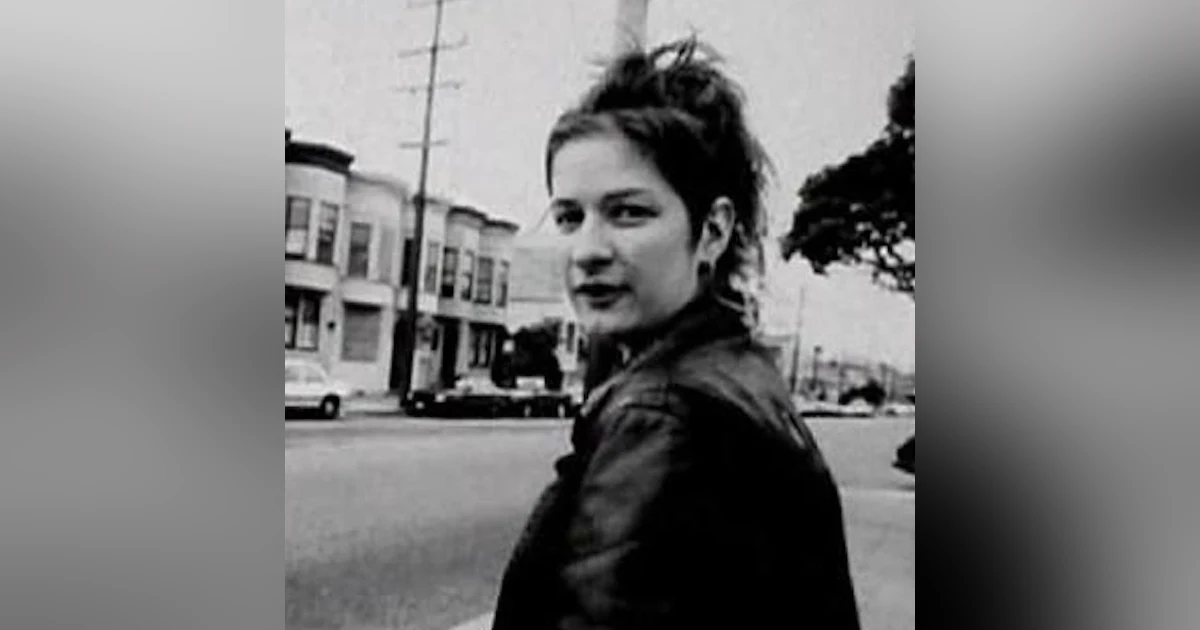
Among the legendary singers of the 27 Club who captivated the world with their music and lyrics, is a woman who is not as well known—one whose powerful voice and thought-provoking lyrics set her apart from the men dominating the industry. Mia Zapata and her band, The Gits, were on the verge of becoming a household name in Seattle's grunge and punk rock scene when everything was ripped away one night in July of 1993. Mia Zapata's violent murder shocked Seattle as a whole. Who would want to kill a woman, with no enemies, who was so dynamic, vibrant, and creative, and how did they get away with murder for a decade?
Connect with us on Social Media!
You can find us at:
Instagram: @bookofthedeadpod
X: @bkofthedeadpod
Facebook: The Book of the Dead Podcast
TikTok: Bookofthedeadpod
Or visit our website at www.botdpod.com
ABOUT — The Gits. (n.d.). The Gits. https://www.thegits.com/aboutAbout Antioch - Antioch College. (2025, May 23). Antioch College. https://antiochcollege.edu/about/Aug 22, 1993, page 143 - The Plain Dealer at Newspapers.com. (n.d.). Newspapers.com. https://www.newspapers.com/image/1070983951/?match=1&terms=mia%20zapataClark, S. J. (1993, July 16). Capital Hill woman found strangled. Seattle Gay News, 1.Dec 20, 1993, page 58 - The Gazette at Newspapers.com. (n.d.). Newspapers.com. https://www.newspapers.com/image/424249475/?match=1&terms=mia%20zapataGreen, P., & Green, P. (2024, October 11). The Life of Mia Zapata and Love After Tragedy - Gen X Watch. Gen X Watch - Stories, Rants, and Being Left Alone. https://www.genxwatch.com/the-life-of-mia-zapata-and-love-after-tragedy/Haring, B. (2021, May 31). Killer of Mia Zapata, influential Seattle punk musician, dies in prison. Deadline. https://deadline.com/2021/05/killer-mia-zapata-seattle-punk-musician-dies-in-prison-1234762659/Holding on to Mia’s magic -- Singer’s killing leaves grief in the 2 worlds she lived in. (1993, August 26). The Seattle Times. https://archive.seattletimes.com/archive/19930826/1717883/holding-on-to-mias-magic----singers-killing-leaves-grief-in-the-2-worlds-she-lived-inMendez, S. (2025, February 3). Mia Zapata of The Gits is still influential 30 years after her death - Los Angeles Times. Los Angeles Times. https://www.latimes.com/entertainment-arts/music/story/2025-01-31/mia-zapata-the-gits-is-still-influential-30-years-after-her-deathMia zapata. (n.d.). The Gits. https://web.archive.org/web/20130406042509/http://thegits.com/?page_id=410Pian Chan, S. (2009, January 30). Singer’s killer sentenced to 36 years in prison again. The Seattle Times. https://www.seattletimes.com/seattle-news/singers-killer-sentenced-to-36-years-in-prison-again/Sheehy, P. (1993, August 1). Mia Zapata: 1965-1993. The Rocket, 9.STATE V. MEZQUIA (2005). (2005). In Case Law (No. 54246-0–I). Court of Appeals of Washington,Division 1. https://caselaw.findlaw.com/court/wa-court-of-appeals/1329872.htmlStone, R. (2019, December 8). The 27 Club: A Brief History. Rolling Stone. https://www.rollingstone.com/culture/culture-lists/the-27-club-a-brief-history-17853/jeremy-michael-ward-25302/Throwaway style: on the gits and what it means to puke the blues. (n.d.). https://www.kexp.org/read/2025/1/30/throwaway-style-the-gits-mia-zapata-historical-essay/Unsolved Mysteries. (2020, September 7). Mia Zapata - Unsolved Mysteries. https://unsolved.com/gallery/mia-zapata/Who murdered Mia Zapata? -- No arrests, few clues 5 years after slaying. (1998, August 23). The Seattle Times. https://archive.seattletimes.com/archive/19980823/2768095/who-murdered-mia-zapata----no-arrests-few-clues-5-years-after-slaying
0:00 Every story has a beginning, but not everyone has an ending. In the shadows of headlines and buried police reports lay the voices of the missing, the murdered, and the forgotten, waiting to be heard and have their stories told. This is The Book of the Dead, a true crime podcast where we remember forgotten victims of heinous crimes, reopen cold cases, re visit haunting disappearances, and uncover the truths buried beneath the years of silence. I'm your host, Courtney Liso, and every week we turn to another chapter, one victim, one mystery, one step closer to justice. Brought to you by Darkast Network in Deep Podcasts with a Twist. Hello, Hello, Welcome to the next chapter in the Book of the Dead.
1:14 The story I have for you today is that of a number of the twenty seven Club. Many of you are probably familiar with this club, which no one truly wants to be a part of, but consists primarily of musicians as well as actors and other creatives, who have all lost their lives at the age of twenty seven. Some say that those in the twenty seven Club were fated to die by this age, whether because they were special or remarkable in some way, or because their deaths at twenty seven meant that they had accomplished some predetermined destiny and their purposes had been fulfilled. While many of these musicians died by their own hands in freak accidents or after years of struggling with substance use disorders, some deaths were more sinister. The case I have for you is of one such death. Among the musical royalty of the twenty seven Club, comprised of legends such as Jimmy Hendrix, Kirk Copein, Janis Joplin, and Amy Winehouse. Is a woman who is making waves in Seattle's punk, rock and grunge scene with hurrah and heartbreaking lyrics and a voice that some say rival to the greats whose life was cut short in the most brutal of ways. This is the murder of Miya Zapata. Mia Catherine Zappato was born in Chicago, Illinois,
2:44 on August twenty fifth, nineteen sixty five, to Richard and Donna Zapata. She was the youngest of three children. She had an older sister named Catherine and a brother Eric. Born into an affluent family, Donna was a television executive and her father was a music executive. She grew up in an upper middle class area of Louisville, Kentucky, called Douglas Hills. According to an article for the Seattle Times, while Mia grew up enjoying the comforts that her family's money provided her, such as good schools, regular vacations, and regular trips to New York. After her parents' divorce, her father spoke of how Mia traversed two different worlds. Quote she lived on two different sides of the street, the straight side one parochial schools, affluent family, and tennis clubs, but when she crossed the street, material things didn't mean anything to her. Mia grew up wildly creative and very assured of who she was as a person. By nine, she had learned how to play both the guitar and the piano, and she had a love of poetry and would journal regularly about all of her thoughts and ideas.
3:57 She also loved to sing, a habit that was lovingly indulged by her siblings, who would accompany her songs with air guitar, and her sister would set the mood with flashlights. Mia was also a talented artist, creating emotionally moving works that expressed how wild and complex her mind and heart were. As a child. According to an article for The Plain Dealer, Mia showed signs of having dyslexia, and she struggled with reading and writing, instead finding comfort in the arts. She would go off on her own at summer camp to work on her writing or sketching, and as she got older and started looking at colleges, she found a home at Antioch College when a professor, after she had confessed her struggles with dyslexia, told her, quote not to worry.
4:42 People with learning disabilities tend to compensate in other ways. They become very creative. In the eighties, after high school, Mia attended the Liberal Arts College in Yellow Springs, Ohio. Aniok College, according to their website, quote, prepares students to live lives of intention, the agency to design their education, to own that education, to govern their college, to collaborate with their faculty, and extend their classroom learning into the real world. So it was a perfect place of learning from Mia, who was all about expressing her creativity and pushing the boundaries of her friends, who she knew were capable of doing more. Her friend Matt Dresdner told the La Times that before he met her, he was both inspired and intimidated by Mia. While he was nervous to talk to her, she took the initiative and approached him, calling him out about his quote lack of initiative as a painter. He said, quote she called me out for half asking it, and from there she's like, tomorrow, you're coming down to the art building with me, and you're going to pain she challenged me. From that moment on, they were friends, and Dresner was vocal about being in awe of MEA's creative spirit. Then he heard her sing an open mic night, and he was blown away. He said, quote, I couldn't believe what I was hearing. I was just so transfixed by her, her voice and her presence. It
6:13 brought me to tears. She was so resonant and personal, and at that point I was like, God, we got to figure out how to start a band, and in nineteen eighty six they did. Originally called in homage to Monty Python's Flying Circus, The Sniveling Little Rat Faced Gits, before shortening their name to just the Gets. The band was comprised of Mia as lead singer, Matt as the bassist, Andy Kessler as the guitarist and Steve Moriarty as the drummer of Mia and Her Voice. Steve told The Rocket quote, Mia was an immensely talented vocalist. She could have sung jazz, blues, country, and western anything, but she chose punk rock because it fit her passionate temperament. And Mia was a passionate person.
7:01 She was a proud feminist and not shy about speaking up about things she believed in. She was also something of an anomaly in a scene dominated by bands fronted by white men Nirvana, Pearl, jam Alison Chains and the like, because not only was me an unapologetically outspoken woman, but she was a proud Mexican American making waves in the industry. In the beginning, while things were new, the bands played a few shows on and off, but things changed when the group, lured by the cheaper cost of living and the fact that it was as far away from Ohio as they could get, moved to Seattle in nineteen eighty nine, accompanied by MIA's best friend Maria Mapra, and the band really grew together, finding their sound and their voice. Andy Kessler said, quote, The thing that's interesting is that the chemistry and power of it was there right away, and it did last from then until the end. We played together sporadically during those cos days, but it was when we moved to Seattle that I feel like we really became a band. The Gets released three EPs from nineteen ninety to nineteen ninety one, playing everywhere from dive bars to university districts, where MIA's raw vocals captivated the audience just as much as her presence on stage. Decked out in the uniform of the punkin grunge scene, Doc Martin's tattoos, ripped jeans and shirts, and hair matted and braided, dyed all sorts of colors, but usually blonde, and decorated with metal rings that once caused her hair to rust, to
8:33 which her sister lovingly said Mia probably liked. While MIA's lyrics conveyed so many strong emotions like anger and rage, she was also incredibly sentimental and much of her personality was incredibly complex and not something she fully showed to everybody. Her sister, Kristen said, quote, there is a side of Mia, a quality about Mia that nobody could ever touch or know, Like the side of Mia that lovingly kept the bouquet she had held at Kristen's wedding, displaying the dried flowers in her bedroom as a reminder of that day. She was also very shy and would oftentimes take time for herself in the band's van after a show to write or just to think. That's not to say, though, that Mia didn't have her struggles. A friend of hers said, quote, at times she drank a lot inside. I think she was happy, but there was also a struggle of day to day life, her art, the band, and her painting, how to reach people, how to communicate In Seattle, the group worked at various bars and restaurants to make ends meet, and built a small but loyal fan base that grew with each show they played as the audience connected with the words that Mia had written. Andy Kessler told The Rocket quote, Mia was naturally gifted with words and people.
9:56 I always thought since we first began playing together that she was the lyricist in punk rock. Of his daughter's writing, Richard said, quote, she absorbed emotion from the people who confided in her. Her gift was to draw the pain or joy that others were feeling and convert them into poems and songs. As their presence started to grow, the Gifts built a small network of fellow bands they would practice with at their home in Capitol Hill, transforming the basement into the Rat House, a pseudo clubhouse where all of their friends and fellow bandmates were welcome, some even having mail forwarded there when they didn't have a permanent address. Ens Mia was at the center of creating this sense of Camarderie among everyone. Valerie Agnew, the Drammer for seven Year Bitch, said, amya quote, she was like nobody I've ever met before. She was so sincere. She was a huge influence on me and everybody in my band. In nineteen ninety, according to k e XP, the Gifts landed a spot opening for Nirvana, who themselves were on the verge of catapulting into stardom, and it led to the booking of US and European tours, as well as the recording of their album Frenching the Bully. Fame was never the goal though, especially for Mia. In fact, according to her friends, her goal was to one day own a cabin in the woods with an old jeep and a sheep dog. However, it was hard to ignore the allure of success that came with their growing presence on the music scene. By the spring of nineteen ninety three, the
11:29 Gifts as a whole were setting their sites ungrowing in the industry. They had hired a professional manager, moved out of the rat House, and some even quit their jobs to focus on the music. Mia even started taking boys lessons to fine tune her vocals and cut back on alcohol to preserve her voice during their summer tour. By June of nineteen ninety three, they were even in talks with Tim Summer of Atlantic Records to get signed and were excited for what the future would be for the band. But everything changed four weeks later. On July sixth, nineteen ninety three, the day before the Gets were to fly out to New York to start another tour, Mia was twenty seven years old and she met up with her father, who had driven up from Yakima, where he was living, to see her. They went to lunch at a Thai restaurant, strolled over to Tower Records, and took a trip to the Seattle Art Museum. Around three pm, she came back to the home she was now living in in Rainier Valley, did some laundry and walked the dog before heading over to Winston Apartments in Capitol Hill at six point thirty to rehearse with her boyfriend, Robert Jenkins's band, until about eight thirty, when she headed to the Comet Tavern. The Comet Tavern was a regular spot for the Gits and their friends to hang out. That night, according to various sources, Mia drank a lot, although no one is clear on what the reason was for her to fall off the wagon after not drinking for the last couple of weeks.
13:00 According to The Seattle Times, some thought it was because she was angry with her boyfriend and wanted to break up with him or had already done so, and others said she was celebrating the start of tour. Some even thought she was drinking to more in the one year anniversary of the death of Stephanie's Sargent, a guitarist for the Seven Year Bitch. At around midnight, Mia headed back to the Winston Apartments from the Common Tavern to talk to her boyfriend, and by all accounts, she was agitated and really wanted to speak with him, but he wasn't in the studio, so she headed up to the second floor to see her friend's Tercy Victoria Kenley, who went by the nickname TV. According to the Seattle Times, TV said that Mia was upset and distracted, mumbling under her breath about something, and at one point Mia abruptly left TV's apartment, before returning a few minutes later with an apology.
13:55 TV told Mia to stay at her apartment for the night, but Mia declined, saying and she was going to get a cab and go home, even though Mia was pretty vocal about not liking caps, she'd rather walk. Mia left TV's apartment at around two am, and he'd be kept watch as Mia headed down the stairs to the exit. The next hour and twenty minutes of MIA's night, though, are a bit of a mystery. There are a few different directions Miya could have headed that night. She could have walked a few blocks north to her friend Maria Mobbers home. She could have headed to a Texico station she was known to frequent two blocks west. Mia could have gone east towards the restaurant she worked at, or she could have gone south to her home. But wherever Mia was headed, she never made it, according to court records.
14:45 At about three thirty am, the Seattle Fire Department was alerted by a sex worker that a woman was lying on the pavement in a dead end street at twenty fourth Avenue South between South Yesler and South Washington Street. When paramedics arrived, they found Mia Zapata lying on her back, her feet crossed at the ankles and her arms spread wide in a crucifixion post. The sweatshirt she had been wearing was pushed up under her arms and the hood was tied around her face and knotted under her throat. Her jeans were pushed down her legs and stepped in the pocket, were her underwear, wallet and ripped bral Paramedics attempted to resuscitate her, but Mia was pronounced dead shortly after their arrival. At the autopsy, it was determined that Mia had been violently raped, sustaining internal injuries, and the medical examiner also believed she had been beaten, as he had found multiple injuries externally as well. Marks on her breasts were believed to have been caused by being bitten, so the area was swabbed for saliva and vaginal swaps were taken, but no other DNA evidence was found. It was determined that her cause of death was strangulation caused by the ties to her sweatshirt being wrapped so tightly around her throat. During the initial investigation, police struggled with a lack of evidence, as they believed that Mia had not died in the alley where she was found. Rather, they believed that she had been killed elsewhere and her body had been moved. The problem was that after she left TV's apartment, no one knew where she had gone.
16:19 Homicide Detective Al Lima told the Plaine Dealer quote two to three twenty am, that seems to be the mystery hour. We've gotten some tips, but nobody has called us and said we saw her get into a car. Now. Police did talk to cabbies that were out that night, but no one remembered picking up anyone that matched MIA's description, and her friends didn't believe she would get into a stranger's car. It wasn't something she typically did. As news and MIA's murder broke, her friends and her family were devastated, and things changed in Seattle very quickly. As a result, her female friends started a self defense group called Home Alive that was active for over fifteen years to teach women how to keep themselves safe, and a couple of weeks after her murder. A benefit was set up with Seattle's rising stars Nirvana, Pearl Jam, and Soundgarden, among others, performing to raise seventy thousand dollars to fund the hiring of a private investigator named Leah Heron to work MEA's case.
17:20 The music scene in Seattle as a whole quickly changed as well. Sez Records owner Daniel House said quote, it was innocent's lost. The brutal way she was killed changed the fabric of the community. We could no longer proceed with the same openness having that person, the killer, still walking around. Maybe he's the guy at the bar, maybe he's summoned at your own party. That changes the way you look at the world. People haven't recovered from it. MIA's friends and family also really struggled with the fact that Mia was the last person they ever thought would be approached in any antagonistic way. She was feisty and not afraid to speak up, and they knew she could and would stand up to anybody if need be. Victoria Agnew, who helped found Home Alive, told the Montreal Gazette quote, that's the thing that's so hard for me to get.
18:15 She was street wise, very tough, very experienced. Had she had known some basic self defense maneuvers, maybe she'd still be alive. While police initially thought me As death was possibly drag or sex work related, once they realized who she was, they looked at her boyfriend as a suspect. Robert was older than her and known to have a mean streak, but he was quickly cleared. Not only did he have a solid alibi, he cooperated fully with the police, taking two polygraph tests which he passed, as well as volunteering fingerprints and DNA samples and hair. Lee Heron told the Seattle Times quote he was genuinely heartbroken after me as death, and he was the most cooperative witness you could ask for. With Robert being cleared, though police had no other suspects to turn to, Mia had no known enemies, was well liked, and they couldn't find any witnesses that could place her anywhere after two am. The investigation hit a dead end very quickly because there were so many possibilities as to what could have happened. MIA's case grew cold very quickly, with nothing for police to go on and very little evidence that could point them in any direction.
19:33 As the years passed, her father made regular trips to Seattle, walking every path he could think of that Mia could have taken on the night she died, in the hopes that eventually he would see or find something that would give him an answer as to who killed his daughter, or simply what could have happened in that mystery hour before she died. He said, quote, there are a hundred ways of getting to where her body was found. Sometimes I'll take what I think was the root she took. Other times I'll try a different route to see if it fits into the scheme of things I want to understand. It's a pilgrimage for me. I guess I don't know. Maybe I think by doing this, I'll figure out what happened.
20:15 As the years passed, the remaining members of the Gets continued to play benefits to continue funding the Private Investigator, and even recorded an album with Jon Jette in nineteen ninety five called Evil Stick, and went on tour with her for another series of benefit concerts. MIA's story was also featured in Rolling Stone and on MTV, which, had this happened while Mia had been living, would have been a huge deal to her and the band. MIA's friends honored hers while in their own way with their own music, like the Seven Year Bitch's nineteen ninety four album Viva Zapata that celebrates me A's life as well as making direct call outs to her murder and vigilante justice. Everyone in MIA's circle, her family and friends continuously found ways to honor her and were fiercely protective of her image, especially when rumor circulated about her death being related to drugs.
21:10 In two thousand and one, eight years after MIA's murder, the DNA samples that were taken at her autopsy were submitted to the Washington State Patrol Crime Laboratory for analysis, and two unique DNA profiles were obtained from the swabs from MIA's breasts, MIA's DNA and saliva from an unknown mail. This was the only DNA able to be extracted from any of the samples. In June of two thousand and two, this profile was submitted to the National DNA Database in the hopes that there would be a match, but police got no hits. However, six months later, in December, the Washington State Patrol was notified that they had a match the DNA sample taken from me as a pot as by body belonged to a man named Jezus Miskia, and he was currently on probation in Florida for a felony conviction for possession of burglary tools. As part of the conditions of his probation, he had to submit cheek swab samples.
22:16 Upon looking into him, police learned that Mischilla was living in Seattle with an unnamed woman from nineteen ninety two to nineteen ninety four, a mile and a half from where MIA's body had been found. In fact, police learned that on the night of the murder, the woman that Misquillo was living with was out of town. On January tenth, two thousand and three, Miskillo was arrested in Miami, and he claimed to police that he had not known of or had any contact with Mia, sexual in nature or otherwise. When her friends and bandmates were asked about Meskia, they had never heard of him, and to their knowledge, Mia had not known him either. Based on the DNA evidence, which was confirmed by blood analysis, and his proximity to the crime scene at the time of MIA's murder, Mezgio was charged with premeditated first degree murder and with first degree felony murder based on first or second degree rape.
23:15 According to court records, After a month long trial, Jezeus Meschio was found guilty of first degree felony murder and sentenced to four hundred and forty months in prison or thirty six years based on the aggravated circumstances of deliberate cruelty. Now Meskia appeals this rolling in two thousand and five based on a few different thanks. One, he argued that he had evidence pointing to Robert Jenkins, MIA's boyfriend, as being her killer. Mia was angry with Jenkins because he was allegedly seeing another woman. She was vocal about her anger towards him right before her death. Jenkins had allegedly called MIA's home the next morning asking for her, and when he was told she might be showering, he allegedly responded that whoever was in the shower wasn't Mia, and a friend of Mia said that Jenkins had been known to quote go crazy, according to Mia, and had even attacked her a few times. This was denied as a reason by the court as there was no sufficient physical evidence to support Robert being Nia's murderer. As there was no proof that he had made any effort to see Mia in the early hours of July seventh, nor was there any identifiable motive for him to have killed her.
24:35 Mezkia also argued that the court denied him his right to use this as a defense, but the court ruled that since the evidence did not clearly connect Robert to the murder, there was the lack of motive, as well as the fact that there was no proof Mia had contacted or attempted to contact Robert before her death, so the decision was ruled as not being an abusive discretion. Mezkia also attempted to have evidence introduced that pointed to a man named Scott McFarlane as MIA's killer. He was a cab driver who claimed to have had a relationship with Mia and had made some alleged statements about the murder after the fact. He had also been in the area at the time of the murder, and the court had ruled that this was admissible as there was sufficient evidence to support McFarlane being the possible killer. But if this was presented, the state was given permission to call a rebuttal witness named Valentina de Seco, who had come forward after the state had rested claiming to have been assaulted by Meskia six months after MIA's murder. Valentina claimed that while she hadn't reported the assault at the time, when she saw his picture in the paper after his arrest, she decided to come forward. Valentina reported that at around four thirty am in January of nineteen ninety four, she was leaving her apartment in downtown Seattle to go jo when he approached her and hid her from behind, knocking her to her knees. Now, Valentina did it away from Mescia,
26:07 but when she returned to her apartment soon after, she saw him standing outside masturbating. Because she was to be called as a rebuttal witness, the court ruled that she could only be called if his defense raised the issue of identity when presenting their evidence of Scott McFarland being the perpetrator, so his defense decided against this to keep Valentina's testimony from being used. Meschia argued that the court erred in deciding this, and the court subsequently ruled that because the evidence regarding Scott MacFarland was never presented, any alleged error on their part was not preserved. For appeal. Meskia also tried to argue that the chic swab was it admissible due to being unlawfully obtained, but the court ruled that the sample was obtained during a minimally intrusive search and lawfully obtained, so the decision stood. Finally, Meschia argued that the court's sentence of thirty six years, based on the aggravated circumstances of exceptional cruelty, violated his sixth Amendment right to a jury trial. He argued this under Blakely v. Washington, which states, other than the fact of a prior conviction, any fact that increases the penalty for a crime beyond the prescribed statutory minimum must be submitted to a jury and proved beyond a reasonable doubt. The court ruled the jury did not determine that the state proved a factual basis for this sentence beyond a reasonable doubt, and they ruled in favor of Meschia. His sentence was
27:37 reversed and the case was remanded for resentencing. According to the Seattle Times, though, when Meskia went back to trial in two thousand and nine, he waived his right to have his case heard by a jury, much to the confusion of his attorney, George Eppler, because he waved his right. This allowed King County Superior Court Judge Sharon Armstrong to rein in state the original sentence of thirty six years in prison for the murder of MIAs Apata, much to the relief of her friends and family. So he really wasted his time going through the appeal process. Had he not raived his right, it was likely he would have been sentenced to eighteen to twenty six years, as was the standard sentence for a crime of this nature. However, Yezeus Meskia did not serve his full thirty six years.
28:29 In twenty twenty one, at the age of sixty six, Meskia died in prison of unknown causes. In the years since her death, MIA's life and legacy have been immortalized by those who knew and loved her. Steve Moriarty especially has been vocal about urging people to focus on who Mia was and not what happened to her. He wrote in his book miyaz Apata and the Gets, a Story of Art, Rock and Revolution. Quote. If one does an Internet search today for the Gets or Mia z Apata, information about her murder, the investigation to find the murderer, and the conviction of him ten years later predominate the results. The music, the lyrics, the people involved in creating the music are secondary or absent Altogether, this cannot stand. His hope with the book was that people would get to know Mia as she was, for her intelligence, wit, powerful raw blues tinged voice, and the lyrics she poured every bit of her heart into writing. In twenty twenty four, the gets first album, Frenching the Bully Ends. Their second album, ent Her The Conquering Chicken, that was finished after MIA's death using her raw vocals, were remastered and they are fantastic.
29:45 In another universe, Mia and the rest of the Gifts would very likely have been touring with the greats and would have been a household name. And I urge you to listen to their music and hear how dynamic Mia was and not focus on how tragically short her life ended up. Being. As always, I thank you so much for listening, and I hope you have a wonderful week, and I will see you in the next chapter of the Book of the Dead. Bye, guys. Another page closed, But the story isn't over for the families left behind. The pain doesn't end when the headline's fade, and for the victims, we owe them more than silence. For our on solved cases. If you have any information, please reach out to local authorities or visit our show notes for links and resources. Someone out there knows something, Maybe it's you.
30:45 Thank you for listening to the Book of the Dead. If this story moved or spoke to you in some way, talk about it, share it, keep their names alive. Until next time, I'm Courtney Liso. Stay safe, stay curious, and stay vigilant, and remember the dead may be gone, but their stories will not be forgotten.
