

 Apple Podcasts

 Spotify

 Castro

 RSS Feed
Chapter 88: The Devils in Pavilian 5-The Lainz Angels of Death
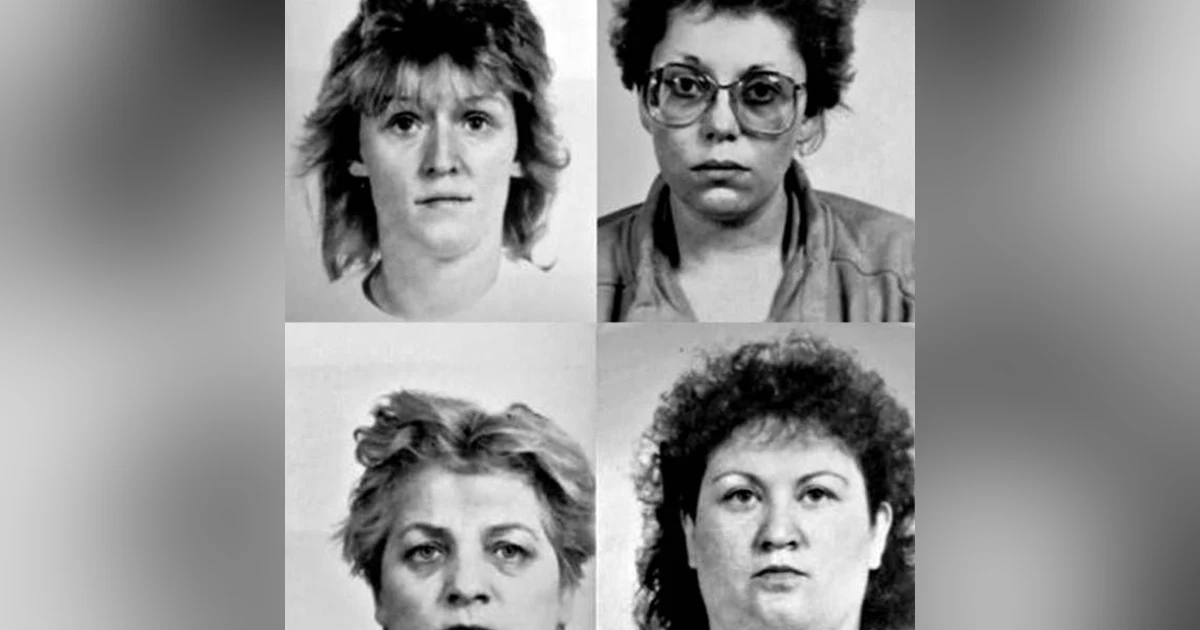
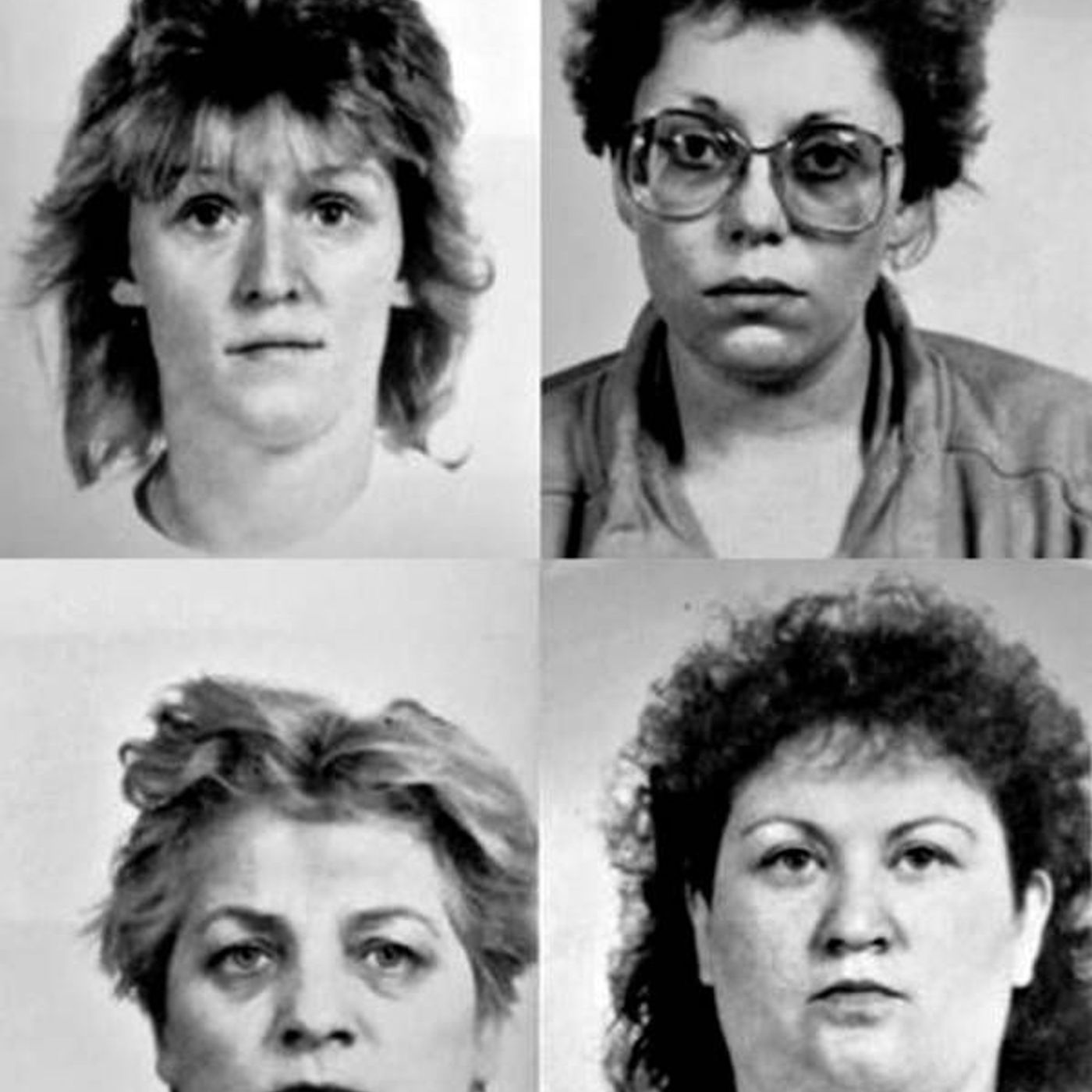
In this chilling episode, we dive deep into one of the most horrifying and mysterious murder sprees in modern history – the Lainz Angels of Death. Operating under the radar for years, a group of nurses at the Lainz General Hospital in Vienna turned...
In this chilling episode, we dive deep into one of the most horrifying and mysterious murder sprees in modern history – the Lainz Angels of Death. Operating under the radar for years, a group of nurses at the Lainz General Hospital in Vienna turned their workplace into a gruesome killing field, responsible for the deaths of at least 49 patients (though some suspect many more).
But what drove these healthcare professionals, sworn to protect life, to commit such unspeakable crimes? How did they evade detection for so long, and what psychological forces played into their twisted motives? We’ll unpack the strange psychology behind the nurses' actions, the chilling modus operandi, and the horrifying moments of the investigation that shocked Austria and the world.
Join us as we explore the dark side of human nature and the terrifying reality of the Lainz Angels of Death. From the cold hospital corridors to the twisted personalities behind the murders, this episode takes you inside one of the most notorious and complex serial killer cases of the 20th century.Get ready for a journey into a case where the lines between care and cruelty blur in the most terrifying way.
Connect with us on Social Media!
You can find us at:
Patreon: The Book of the Dead Podcast
Instagram: @bookofthedeadpod
X: @bkofthedeadpod
Facebook: The Book of the Dead Podcast
TikTok: Bookofthedeadpod
Or visit our website at www.botdpod.com
Don't forget to Rate, Review, & Share with someone who would like the Podcast
Promo for Scottish Murders Podcast
Scottish Murders is a twice award shortlisted, fortnightly podcast that brings to light the stories of murders victims from or living in Scotland and the relentless pursuit for justice in solved and unsolved cases, and is sensitively and respectfully hosted by Dawn.
Listen here
For a full list of Sources please go to botdpod.com
Anomalien.com. (2019, February 21). Lainz Angels of Death: 4 Nurses Killed 49 Patients. Retrieved June 30, 2022, from https://anomalien.com/lainz-angels-of-death-4-nurses-killed-49-patients/CBS News & Associated Press. (2008, July 17). Austria’s “Angels Of Death” To Be Released. CBS News. Retrieved June 6, 2022, from https://www.cbsnews.com/news/austrias-angels-of-death-to-be-released/Cooksey, K. (2008, July 18). Austrians outraged over “death angels” release. The Guardian. Retrieved June 30, 2022, from https://www.theguardian.com/world/2008/jul/18/austriaDavis, N. (2012, November 26). Making of a Monster: Waltraud Wagner (Angel of Death). Pick Me Up! Retrieved June 29, 2022, from https://healthpsychologyconsultancy.wordpress.com/2012/11/26/making-of-a-monster-waltraud-wagner-angel-of-death/Death Angels of Lainz. (2020, October). Missing Doe Europe. Retrieved June 30, 2022, from https://missingdoe.com/sk-0001/Donkey Junk. (2021, August 17). Lainz “Angels of Death” The disturbing story of the Austrian killer nurses. Retrieved June 30,...
0:00 Hi guys. I'm Courtney and I'm Lisa, and welcome to the next chapter in the Book of the Dead. Brought to you by dark Cast Network indie podcasts with a Twist. Scottish Murders is hosted by Me Dawn and as a multi award shortlisted victim focused podcast covering the murders of those from or living in Scotland. We tell each victim's story in a respectful, sensitive, unsensational and unopinionated way. So why not join us whenever you listen to your podcasts and ensure you never miss an episode of Scottish Murders.
1:00 Hello, Hello, Welcome to the next chapter in the Book of the Dead. By the title of this chapter, I think a lot of you can gather, or at least those of you have been listening since the beginning can gather what we're going to be talking about today. So for our very first episode, for those that don't know, haven't listened, and I don't blame you for not listening, we recorded an episode covering the Lanes Angels of Death and it was not a good episode. The content was good, the research was good. But I instead of waiting to get a new computer because mine had died. It decided.
1:46 You know what, I'm really excited. I'm going to record this anyway on my iPad in my living room. And it's terrible. At the time, I thought it sounded okay. I knew it wasn't good, but I thought it was okay. Listening to it today, two years later, two and a half years later, it's awful. So I finally recorded it, something I had wanted to do for a very long time. I rewrote out the whole thing. I added some new information, not a lot, but some new informations. It's a little bit different than when you first heard it. But I am excited to bring you this episode in the way it was intended, properly, with good audio, clear audio. So without further ado, we are going to jump into the lanes angels of death. This story begins in nineteen eighty three and Vienna, Austria, with a woman named walterd Wagner.
2:51 And like I said when I first covered this story, there's really no information on who she was as a person as she was growing up, or what her childhood was really like. But when she was twenty three years old, she got a job as a nurse's aide at the Lane's Hospital in Vienna, specifically in Pavilion five. Lane's General Hospital was built in eighteen thirty nine and was the fourth largest medical facility in Vienna. Pavilion five was part of the Internal Medicine department and primarily focused on patients with terminal illnesses, whether that be patients with cancer, patients and end of life care, or patients who were very elderly.
3:37 Problem patients quote unquote were also placed in Pavilion five, and those were patients that may have been suffering from some sort of mental illness or who were considered pretty difficult to deal with now. Because of the type of war this was. Many of the patients were over seventy five years old, so they were quite elderly. When waltter Trip began working in Pavilion five, things were not easy. Working as a nurse or a nurse's aid in general is not an easy job. However, things were made worse by the hospital being critically understaffed, and that was the problem that Austria had in many of their hospitals. According to a nineteen eighty nine article for The New York Times, nurses at Lane's Hospital were working over sixty hours a week to try and compensate for the lack of staff and the nurses. Aids themselves base salary was only six hundred and thirty five to seven hundred and fifteen dollars a month, which was half of what the nurses themselves were making. And just to put that in perspective, that's the equivalent of two thousand and four to two thousand, two hundred and fifty seven dollars in today's economy. Mind you, that's the conversion for American dollars, but still that's not a lot of money to live off of. Obviously, there were huge discrepancies in the pay which contributed to the staffing issues because the hospitals couldn't afford to pay qualified
5:08 people to be nurses, so many aids and orderlies around Austria had to do work and take on responsibilities outside of their usual jobs that they did not have the qualifications for training to do. Ordinarily, aids would be in charge of providing basic care to patients like bathing or feeding, helping with mobility, monitoring vitals and transporting patients to different rooms. They would assist with toileting, taking vital signs and reporting changes to the nurses. They may make sure that a patient is taking their medicine if it's in pill form, but they are not authorized to give medicine intravenously. That is not something that an AID does now, and they weren't doing it in the eighties either, as they are not trained or certified to do so. Because of the staffing issues, there was also little to no supervision on the ward. There were no doctors or nurses making sure that things were being done properly or making sure that the aids were following procedures. It was essentially a free for all because no one with any qualifications was around to keep an eye on things. So Waltrade was going through work every day doing all sorts of different jobs that she shouldn't have been doing because she had to. Obviously, she wasn't the only one, but the AIDS will be focusing on. In addition to Waltride, our twenty one year old Irene laid off in nineteen year old Maria Gruber.
6:40 Irene was married and preferred to spend her free time with her coworkers as opposed to her husband, and Maria was a nursing school dropout and single mother, so out of the three of them, she had the most knowledge in the sense that she had had some training, but she wasn't certified in anything because she hadn't completed her schooling. One day, while working, Waltrid is taken care of an unnamed patient, and this patient is very ill and can't take it anymore. She asks walterd to help her die in an assisted suicide. Now, prior to twenty twenty two, assisting in the suicide of another person was illegal in Austria.
7:24 According to the World Federation Right to Die Society, Austria had one of the most rigorous prohibition systems against suicide assistants, and they also prohibited it occurring abroad, So if you lived in Austria as an Austrian citizen and went out of the country, you could still be persecuted. Quote. Till twenty twenty two, articles seventy eight of the Austrian Penal Code read anyone who induces others to kill themselves or helps them is punishable by imprisonment of six months to five years to punish. Since January first of twenty twenty two, the word or helps them are removed from the article that now reads anyone who induces another to kill himself is punishable by imprisonment of six months to five years. Now, after this was amended, assisted suicide is allowed under strict requirements.
8:18 The person wanting to die has to be fully informed by a doctor and they have to have diagnosed disease or illness, and then a second doctor has to verify that the person is fully capable of making this decision. They have to wait two to twelve weeks depending on what the prognosis is. A death order has to be drawn up by a patient advocate or a notary which will allow them to access lethal preparation which is accessed at a pharmacy, and it has to be noted in a registry if this is submitted. And the reason this law was amended was because in twenty twenty the Austrian Constitutional Court ruled that prohibiting assisted suicide violated a person's right to self determination. So while it is legal now, it was not legal when this patient approached Waltrid about assisting her suicide. So this patient was dying of an undisclosed illness and they didn't want to suffer anymore, so Waltrid agreed to help and administered an overdose of morphine.
9:20 The woman died like she wanted, and that should have been the end of it. Now. If it's stopped there, one could almost commend Waltrid for doing this. While it's highly unethical and illegal, you could argue that she was trying to do the right thing by choosing to help this patient and their suffering. It happens today legally in controlled environments, like in hospice settings, and the person is usually given paid medication to make them comfortable, and they aren't given food or drink. Again, it's done ethically and in a controlled environment, the patient isn't typically being given an overdose. However, this patient's death was a catalyst for Waltride and would be the beginning of a reign of terror in Pavilion five. You see, Waltrid realized something when she administered that overdose. She realized that while this patient may have decided to die, she needed Waltrid to make it happen. Waltrid got to play God in that moment, and that gave her a power that she didn't know was possible. It was by her hand that someone died, and she loved the feeling that gave her. Her actions directly impacted someone else in a literal life or death situation.
10:42 So Waltred is thrilled with this newfound power, and she approaches Irene and Maria and tells them what happened and how great she felt about it, and she asked them to join her. Maria and Irene agree, which is just as baffling to me now as it was when I first covered this story that they not only agreed to do this, but they also allegedly didn't find this horrific in any way, although at least in Irene's case, according to doctor Nikola Davies, who gave an interview on her thoughts about these women, Irene was likely susceptible to the idea of doing this if it was framed as a merciful act, as she had spent a bulk of her life caring for her critically ill father. So the three of them go on to start killing patients, and at first they're doing this intravenously. They start out with morphine, and then they move on to insulin and rufinol, which they have unlimited access to working in a hospital, and no one is paying attention. They're getting away with it because of the type of war they're in the patients that are dying are terminal or otherwise very ill or elderly, and they're killing one patient a month, so no one is really questioning why patients are in this ward. A patient passing isn't necessarily a cause for alarm, at least at first, because it's relatively expected that these patients could die while at the hospital. Eventually, though, Waltrid decides that
12:16 administering overdoses isn't enough for her. It's not exciting enough, and the reason for this is that Waltred is highly irritated by most of her patients. The reason is that, even though she chose this job, her patients were an inconvenience. So it was to the point where if a patient irritated her, she would kill them, and she would do this for any reason. If a patient pressed the call button too many times, she would kill them. If they refused to take their medicine, it didn't matter if they made her angry, she decided to kill them. She killed patients for complaining. If someone had an accident in their bed, she would they quote that one just bought themselves a ticket to God. So, because she felt so annoyed by these patients, she came up with more creative ideas to end their life, one of which was the water cure. Now, Waltred was the primary initiator of the water cure according to the others, and if they did this themselves, they alleged that she forced them into doing this. The water cure consisted of one of them, usually Maria or Irene, and later the fourth member of their group would pinch the nose of a patient closed and push their tongue against the roof of their mouth. Then another usually Waltred, would pour water down their throats to drown them. So
13:48 this was an even more extreme version of waterboarding. To give you an idea of how horrific this was. Once the news broke, these women were literally compared to Joseph Mangela. This was so bad it was compared to Nazi war crimes. This went on four years, and in nineteen eighty six there was actually a report of a suspicious death when a patient overdosed on sleeping pills, but when police showed up to the hospital to investigate this, they were allegedly refused entry. Hospital officials claimed that they had done their own internal investigation and found no evidence of the death.
14:28 Being suspicious and that things were under control, so the police left. Now, in nineteen eighty seven, a new woman on the ward was brought into the group named Stefania Meyer, who was a forty three year old immigrant from Yugoslavia. She was the oldest of the group and was considered the mom of the four of them because she had children and grandchildren. Now, after Stefania comes in, things start to accelerate and they go from killing one patient a month to three or more. The reason things started to accelerate is because the women were growing more confident that they were getting away with this. No one was questioning anything, and they believed that these methods of killing were undetectable, which on the surface they were. If you just look at someone without running any sort of tests, you can't see if they've drowned or overdosed because it's not leaving a visible mark. When these patients passed, no one was doing an autopsy or a more thorough examination like looking for petikia in the eyes, because, as I said, many of these patients were terminal, so there was no reason to run tests to find out what happened. The patient's family or the attending physician can request one, but it's not something that's necessary if the patient had a known
15:59 terminal condition or was already feeble. So these women have started to get sloppy when it comes to being discreet about what they've been doing. And in February of nineteen eighty nine, they really throw discretion out the window. These women go to a bar after work and they start talking about the patient they've just killed, named Julia Drapel. Now, Julia was, at least according to Waltride, a very difficult patient, and we've already established that Waltrde doesn't like difficult patients. Julia had allegedly refused to take her medicine and called waltred a common slut. So Waltrede, pissed off, used the water cure to kill Julia. As I said when I originally covered this story, I give a lot of credit to people that work in healthcare. I really do. You encounter a lot of difficult patients, and you deal with a lot of crap that isn't right, But at the end of the day, you have to let it go, let it roll off your shoulders. When someone is sick, they get upset, they get angry, and you can't take offense to it. You have to move on. But everything irritated Waltrid and she wasn't going to let a patient disrespect her, even if it really wasn't that serious. So they're talking about this murder and they think it's the greatest thing. They're laughing, they're joking, they're just bragging about
17:33 what they've done. But the problem is that they're talking about this in a bar. Now, unbeknownst to them, sitting right next to them is a doctor. Now I don't believe that this doctor was known to them. I don't know if he worked at Lane's, but even if he did, I don't believe that they knew him, or if they did, they didn't notice him. But he figured out what they were talking about in what they had done. He goes to the police, and the police investigate for six weeks before arresting all four women on April seventh of nineteen eighty nine. After the arrests, the women start confessing immediately, and they claimed to have killed forty nine people, before later recanting and claiming it was really forty four people.
18:29 According to an article for the United Press by John Hollins, police Chief, gun their Bogels said that he could not assure that the final murder toll would be the forty four patients that the women had confessed to killing, and in fact, by the time corporaceeeding started, the women had changed their statement again and claimed that they had only killed twenty people and they were all mercy killings. Again. The reason they thought they could get away with this was because they believed their methods of the murder were untraceable, But the police had victims' bodies exhumed and autopsy and toxicology reports proved that patients had died of overdoses, and there was fluid and water present in the lungs of others that pointed to drowning. Now to backtrack a bit, when the police were initially contacted in nineteen eighty six about the suspicious death, it was actually Waltred who was suspected of being at fault for this. The reason that nothing happened with this alleged internal investigation was because it was reported that Waltred was incredibly charming and helpful. According to a doctor on the ward, this is very likely how she got away with things for so long, because she put on this wonderful persona to hide who she really was. But this is just another layer that the police could add to their investigation that she was suspected previously of a patient's death, so when the women go
20:00 to trial, State Prosecutor Earnest Globel stated that the true number of victims was probably much higher than what they were able to prove, which was thirty nine victims, and he believed that the actual number of victims was likely two hundred or more. However, there was no way to know for sure because it's not realistic to exhume that many people. He also compared the women and the murders to medical experiments performed in Nazi death camps, and he also said, according to Killer Women Chilling, dark and gripping True crime Stories of Women Who Kill by Nigel Cawthorne, quote, this was not mere killing, but cold blooded murder. The judge also responded to Waltred's insistence that these were merpcy killings, saying, quote, these patients were gasping for up to half a day before they died. You cannot call that pain relief. A pathologist tested that upon examination of the exhumed bodies, the presence of fluid in the lungs supported the accusation that Waltred was using water as a method to kill her patients.
21:12 On the stands, Stefania Meyer claimed that she had been forced to observe the murders of two patients using the water cure, and that she feared that if she did not do as Waltred said, she would lose her job. In another article for the United Press by Marcia Hill, a psychiatrist that examined all the women testified that none of them displayed any psychopathic disorders, and Waltred specifically was described as barely of average intelligence, neurotic, but of normal character. So, according to this psychiatrist, Waltred wasn't particularly smart, she displayed negative emotions, but she was otherwise a functioning member of society.
21:54 So there was no medical reason to explain why these women did what they did. They were just evil. It also came out how subpar the working conditions were at Lane's and how the patients weren't receiving proper care, as a way to place the blame on the hospital, which the hospital absolutely carries some blame for allowing this to go on for as long as it did and doing nothing to rectify what was happening. Now they would claim that they had done something. As the head of the department at Lanes, doctor Xavier Penzendorfer, was suspended in nineteen eighty seven for failing to launch a timely investigation into the deaths occurring on the ward, but at a news conference, when asked why this had gone for so long, he said, according to The New York Times, that he had alerted authorities and supervisory doctors and nurses, as well as ordering autopsies when suspicions were raised, saying, quote, what more could I have done? He also said that the murdered patients were not victims of the system, but victims of crimes that could not have been anticipated or prevented, which is mind boggling because these were crimes that could have been prevented.
23:12 They may not have been anticipated, but there is no reason that the hospital could not have prevented further murders. I understand a few of them maybe not raising alarm bells, but there's no way that they got away with at minimum thirty nine, like the police were able to prove up to two hundred plus. There's no way the hospital didn't know. Now there were patients that survived encounters with the women, one of whom being a man named Frank Cohut. According to his son's testimony, Waltred became very hostile when Frank had went the bed and told him, quote, old man, if you do that again, you're going to get it, after which she had attempted to give him an overdose of insulin, which Waltred said was just her trying to get him moved to a different ward. She said she wasn't trying to hurt him. At the conclusion of the four week trial in nineteen ninety one, all of the women were convicted for their crimes, and it was reported by Desert News that Waltrd was in a daze through most of the trial and fainted at sentencing, as did Stefani A Meyer, who had to be taken out on a stretcher. Now Wagner received a life sentence for fifteen counts of murder, seventeen counts of attempted murder, and two counts of assault. Irene laid Off received a life sentence
24:42 for five counts of murder and two counts of attempted murder. Maria Kruber received fifteen years for manslaughter and attempted murder, and Stefanier received twenty years for attempted murder and manslaughter. The thing is, though, is that Austria has maximum sentencing laws and they are vastly different than what would happen in America. Here in the States, if someone were to receive a life sentence with the possibility of parole, then technically they could be released after fifteen years and serve the rest of their life sentence on parole. If a person gets multiple life sentences or a sentence without the possibility of parole, then that person would spend the rest of their life in prison. However, in Austria, a life sentence is just fifteen years, which can be extended to life if the person is not granted special clemency by the president. This means that the president would make a decision based on if they believed the offender has been rehabilitated or not. If not, the decision would be made for the offender to spend the rest of their life in prison, but if they had, then they could be released.
26:00 Austria as a country has a heavy emphasis on rehabilitation when it comes to prison, and they have various educational programs and jobs that a person can go through while in prison to work towards release. They also have a program in place to reacclimatize prisoners to life outside of prison. So Irene and Waltrade were allowed to leave the prison on day trips to go shopping or have their hair done in the months leading up to the end of their sentence. In two thousand and eight, both women were released after serving only eighteen years for good behavior, and a few years prior, Maria and Stefania were released as well and given new identities. So all four women are living their lives in anonymity after killing possibly hundreds of people, but Austria says they're rehabilitated now. Like I did the first time I covered this story, I am going to reiterate a bit of this psychology behind medical professionals who kill so According to an article written by Fiona Guy for Crime Traveler dot org, the psychology behind killers in healthcare sheds light on a lot of similarities between medical serial killers, kind of like we discussed when I interviewed Bruce Sackman. According to doctor Indra Kinkin, an assistant professor of psychology and behavioral Sciences at the University of Virginia.
27:30 Seventy percent of perpetrators kill in a hospital setting, and over half of all killings within this field are caused by lethal injection, as it can only be found through toxicology testing. The victims are usually elderly, as this alludes to the depths being from natural causes, which deters the performance of testing or autopsies due to age or illness leading up to the death. Doctor Kinkin described four categories of motives for medical killers. Seekers achieve a thrill from the act of killing that they want to repeat. Power oriented killers want to achieve the feeling of power and control. Gain, motivated killers killed to receive something out of the murder, like theft or relieving themselves of the burden of caring for the patient, and the less common missionary killers believe they are doing a good deed by getting rid of those they deem to be unworthy or immoral or unimportant.
28:29 Research conducted by Elizabeth Ardley and David Wilson for the Journal of Investigative Psychology and Offender Profilings state that the common traits in medical serial killers include attention seeking, strange behavior when a patient dies, frequent changes in hospital working locations, and a disciplinary record. It's also stated that the repetitive cycle of killings suggests that there is an addictive element to the pleasure associated with committing the murder. Now. Based on this, there was an interview done with doctor Nicola Davies as I mentioned about Waltrid, and she believed that Waltrid started killing as a way to release pent up anger or emotions, and she had a need met when she killed someone. She said quote Waltride likely gains some kind of sadistic pleasure in witnessing other struggles. She also said that her victims likely reminded Wagner of someone or something she wanted to forget, not that anyone is really sure who or what that is because there's just such a lack of information of her early life now. In the aftermath, the hospital did try and take steps to separate themselves from what had happened. The original name for the hospital was Krokenhouse Laines, and they changed the name to Krokenhouse Heightsing in two thousand. The name of the senior home next door was also changed to try and separate the hospital from what these women had done. It's
30:03 interesting looking back now of the psychology of medical serial killers with the information gained from speaking to Bruce Sackman who caught doctor Michael Swingo, which was a really great interview that we did last year. He was a really wonderful man to speak to and learn about his career and the things he had done catching medical serial killers and doctor Michael Swango. So definitely go listen to that. And it's interesting looking back on our coverage of Lucy Leppie and some of the characteristics that are associated with her that match the characteristics of medical serial killers, which is interesting because there are people out there that believe Lucy Leppie is innocent or was framed, which is an interesting theory. However, she was convicted. So I thank you for listening to this again if you hadn't heard it already, I hope you learned about something you hadn't heard of before.
31:06 Not many people have covered this. There are very few people in the podcast world, from what I've seen at least, that have actually covered the Lane's Angels of Death. I'm glad that I finally got to redo this one. It has been on my list to re record for a very long time and I'm glad I finally did it. There's one or two others that I'm interested in re recording, so that may happen eventually. But with that, I thank you for listening. I thank you for listening again if you've heard it the first time. And with that, I hope you have a wonderful week and I will see you on the next chapter of the Book of the Dead. Bye, guys, thank you so much for listening to this chapter of the Book of the Dead, and don't forget that you can always connect with us on Instagram, you can connect with us on Twitter, and you can absolutely connect with us on Patreon. We also have a March store as well that we have frequent discount codes coming out for so that you guys can get March hand drawn by myself at a better cost. We hope you have a lovely rest of your week, and just remember, please be kind and don't forget to always stay safe, stay curious, and stay vigilant. Bye guys.
